
In today’s rapidly evolving digital economy, scalability defines long-term success. Businesses must expand operations, serve growing customer bases, and enter new markets without compromising performance or stability. At the forefront of this transformation is EMPATH TECH FZCO, a trusted provider of strategic cloud-driven innovation. By delivering advanced enterprise cloud infrastructure solutions, EMPATH TECH FZCO empowers organizations to scale efficiently, securely, and sustainably.
Modern growth is no longer limited by physical data centers or hardware procurement cycles. Instead, it is driven by intelligent, elastic, and secure cloud environments. This article explores how enterprise cloud infrastructure supports scalable business growth and why it has become a foundational pillar for modern enterprises.
Understanding Enterprise Cloud Infrastructure
What Is Enterprise Cloud Infrastructure?
Enterprise cloud infrastructure refers to the integrated ecosystem of cloud computing resources, networking, storage, security, and management platforms designed to support large-scale business operations within a well-defined enterprise cloud infrastructure strategy. Unlike basic cloud setups, enterprise cloud infrastructure includes:
- Multi-region deployments
- Hybrid and multi-cloud architectures
- Advanced security frameworks
- Automated orchestration and monitoring
- Compliance-ready governance structures
It is built not just for performance, but for strategic scalability.
Why Enterprises Depend on Cloud Infrastructure
Scalable growth demands flexibility. Traditional IT infrastructure often required heavy capital investment and long deployment timelines. Enterprise cloud infrastructure changes this dynamic by offering:
- On-demand resource provisioning
- Pay-as-you-go pricing models
- Rapid global expansion capabilities
- Continuous performance optimization
This flexibility enables businesses to grow without being constrained by physical limitations.

Elastic Scalability as a Growth Engine
Dynamic Resource Allocation
One of the most powerful aspects of enterprise cloud infrastructure is elasticity. Businesses can automatically scale computing power, storage, and networking resources based on real-time demand.
For example:
- E-commerce platforms can handle traffic spikes during peak sales.
- SaaS providers can scale servers to accommodate new user growth.
- Financial services platforms can process high transaction volumes during market surges.
This elasticity ensures performance stability during expansion.
Supporting Seasonal and Rapid Growth
Many industries experience unpredictable growth patterns. Enterprise cloud infrastructure allows companies to:
- Scale up quickly during demand spikes
- Scale down to reduce costs during slower periods
- Avoid overprovisioning hardware
This operational agility directly supports sustainable growth strategies.
Accelerating Innovation Through Cloud Capabilities
Faster Development and Deployment
Modern enterprises rely on rapid innovation. Enterprise cloud infrastructure supports DevOps practices by enabling:
- Continuous integration and deployment (CI/CD)
- Automated testing environments
- Containerization and microservices architectures
Development cycles shorten dramatically, allowing businesses to bring products and features to market faster.
Enabling Emerging Technologies
Enterprise cloud infrastructure is the backbone for advanced technologies such as:
- Artificial Intelligence (AI)
- Machine Learning (ML)
- Big Data analytics
- Internet of Things (IoT)
These technologies drive innovation, operational efficiency, and competitive advantage.

Cost Efficiency and Financial Flexibility
Reducing Capital Expenditure
Traditional infrastructure required large upfront investments in hardware and facilities. Enterprise cloud infrastructure shifts this to operational expenditure (OpEx), offering:
- Subscription-based models
- Usage-based billing
- Flexible financial planning
Businesses can allocate capital toward innovation rather than maintenance.
Intelligent Cost Optimization
Cloud platforms provide monitoring and optimization tools that:
- Detect unused resources
- Recommend cost-saving adjustments
- Automate scaling decisions
Financial transparency enhances sustainable growth.
Enhancing Global Expansion Capabilities
Multi-Region Deployment
Enterprise cloud infrastructure supports deployment across multiple geographic regions. This enables:
- Faster load times for global users
- Compliance with local data regulations
- Resilience against regional outages
Global expansion becomes seamless rather than complex.
Supporting Distributed Teams
Remote and hybrid work environments require secure and scalable access. Cloud infrastructure enables:
- Secure remote connectivity
- Cloud-based collaboration tools
- Centralized resource management
Workforce scalability becomes aligned with business growth.
Strengthening Security at Scale
Built-In Enterprise Security Frameworks
As organizations grow, so does their attack surface. Enterprise cloud infrastructure integrates security controls such as:
- Identity and Access Management (IAM)
- Zero Trust architecture
- End-to-end encryption
- Continuous monitoring
Security scales alongside business operations.
Compliance and Regulatory Support
Expanding businesses must comply with regulations like GDPR, ISO, and industry-specific standards. Enterprise cloud infrastructure includes:
- Policy-based governance
- Automated compliance reporting
- Data localization controls
Growth does not compromise regulatory integrity.
Data-Driven Decision Making
Scalable Data Management
Modern businesses generate massive amounts of data. Enterprise cloud infrastructure enables:
- Real-time data processing
- High-performance analytics
- Automated data lifecycle management
Scalable data systems support informed strategic decisions.
Predictive Analytics for Growth Planning
Cloud-based analytics platforms provide insights into:
- Customer behavior trends
- Market expansion opportunities
- Operational efficiency metrics
Data-driven strategies fuel sustainable business growth.
Business Continuity and Resilience
High Availability Architecture
Scalable growth depends on uptime. Enterprise cloud infrastructure includes:
- Redundant systems
- Multi-zone failover mechanisms
- Continuous system health monitoring
Resilience ensures uninterrupted service delivery.
Disaster Recovery Solutions
Cloud-based disaster recovery strategies allow businesses to:
- Back up data automatically
- Restore services quickly
- Minimize downtime
Business continuity strengthens long-term scalability.
Automation and Intelligent Infrastructure
Infrastructure as Code (IaC)
Automation is critical in enterprise environments. Infrastructure as Code enables:
- Consistent deployments
- Reduced configuration errors
- Faster environment provisioning
Automation simplifies complex scaling processes.
AI-Powered Optimization
Advanced enterprise cloud infrastructure leverages AI to:
- Predict workload demands
- Optimize resource allocation
- Detect anomalies automatically
Intelligent systems enhance operational efficiency.

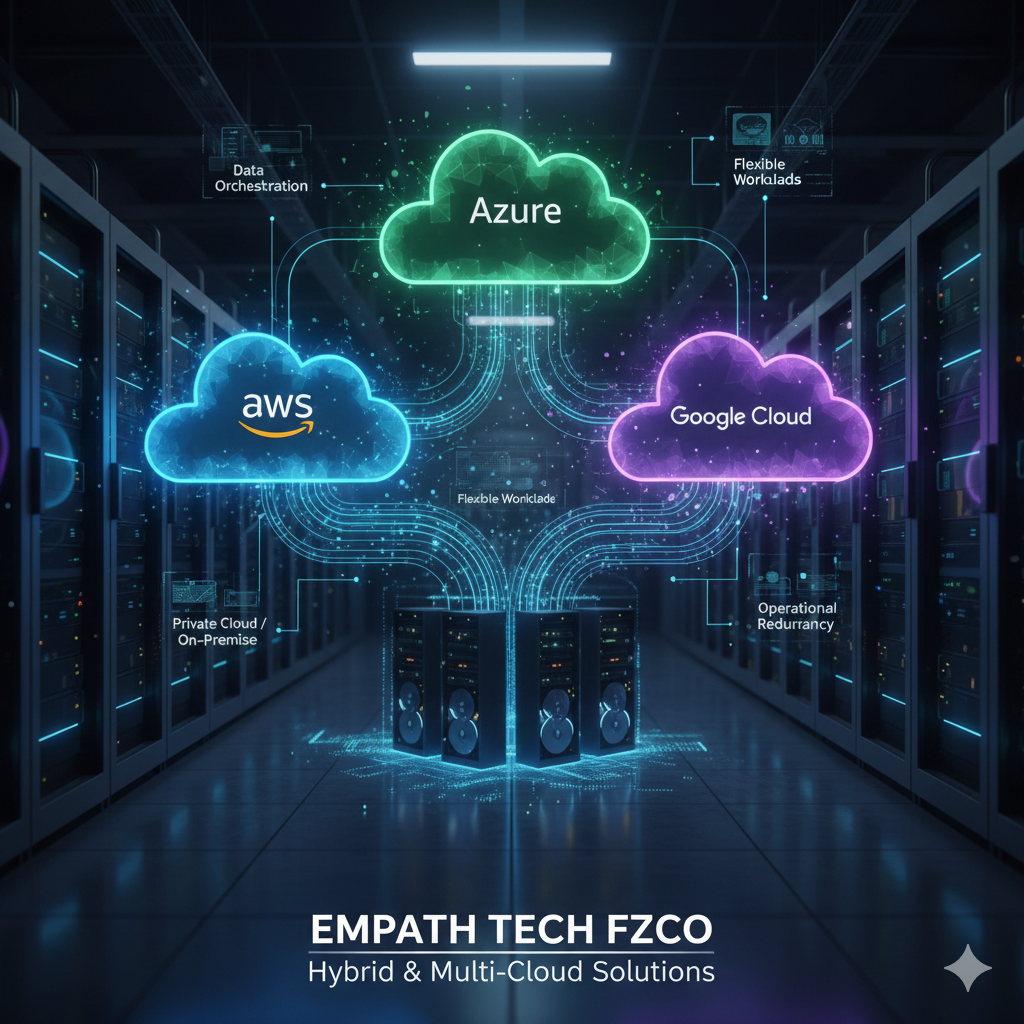
Hybrid and Multi-Cloud Strategies
Balancing Control and Flexibility
Many enterprises adopt hybrid models combining on-premise systems with cloud platforms to leverage the hybrid cloud environment benefits that balance flexibility, regulatory control, and long-term scalability.This approach allows:
- Gradual digital transformation
- Sensitive data control
- Flexible workload distribution
Hybrid strategies reduce risk while enabling growth.
Avoiding Vendor Lock-In
Multi-cloud strategies ensure:
- Operational redundancy
- Competitive pricing leverage
- Greater system resilience
Enterprise cloud infrastructure must support interoperability across providers.
Aligning Infrastructure with Business Strategy
Infrastructure as a Strategic Asset
Enterprise cloud infrastructure is no longer just a technical foundation—it is a business enabler. It supports:
- Digital transformation initiatives
- Platform-based business models
- API-driven ecosystems
Scalable infrastructure aligns directly with revenue growth strategies.
Supporting Mergers and Acquisitions
When businesses expand through acquisitions, cloud infrastructure enables:
- Rapid integration of systems
- Centralized management
- Unified security frameworks
Scalability extends beyond organic growth.
Sustainability and Long-Term Growth
Energy Efficiency and Green Cloud Practices
Modern enterprises prioritize sustainability. Enterprise cloud infrastructure supports:
- Energy-efficient data centers
- Carbon-aware workload placement
- Optimized resource utilization
Sustainable practices align with corporate responsibility goals.
Future-Proofing Business Operations
Cloud infrastructure ensures businesses can:
- Adapt to emerging technologies
- Scale with market demand
- Remain competitive in digital ecosystems
Future readiness is built into the infrastructure layer.
The Competitive Advantage of Enterprise Cloud Infrastructure
Scalable growth requires more than ambition—it requires a strong digital foundation. Enterprise cloud infrastructure provides:
- Elastic performance
- Secure environments
- Intelligent automation
- Financial transparency
- Global reach
Organizations that invest strategically in enterprise cloud infrastructure gain the agility needed to innovate and compete in evolving markets.
Conclusion
Scalable business growth depends on resilient, flexible, and secure systems. Enterprise cloud infrastructure delivers the agility, intelligence, and reliability required to support expanding operations, global markets, and digital innovation.
With a forward-thinking partner like EMPATH TECH FZCO, organizations can harness enterprise cloud infrastructure to unlock new opportunities, drive operational excellence, and achieve sustainable growth. In today’s digital-first world, scalable cloud infrastructure is not just an IT solution—it is the engine powering long-term business success.