
In an era where agility and scalability define competitive advantage, EMPATH TECH FZCO helps organizations design intelligent cloud strategies tailored to long-term growth. Among the most effective approaches today is the hybrid model, which combines on-premise infrastructure with public and private cloud platforms. Understanding hybrid cloud environment benefits is essential for enterprises seeking flexibility, control, and sustainable digital transformation.
Hybrid cloud environments are no longer transitional solutions—they are strategic architectures built upon a robust enterprise cloud infrastructure that empowers growing enterprises to balance innovation with governance. This article explores how hybrid cloud models support scalability, security, performance, and operational efficiency.
What Is a Hybrid Cloud Environment?
Defining Hybrid Cloud Architecture
A hybrid cloud environment integrates:
- On-premise data centers
- Private cloud platforms
- Public cloud services
- Unified networking and orchestration tools
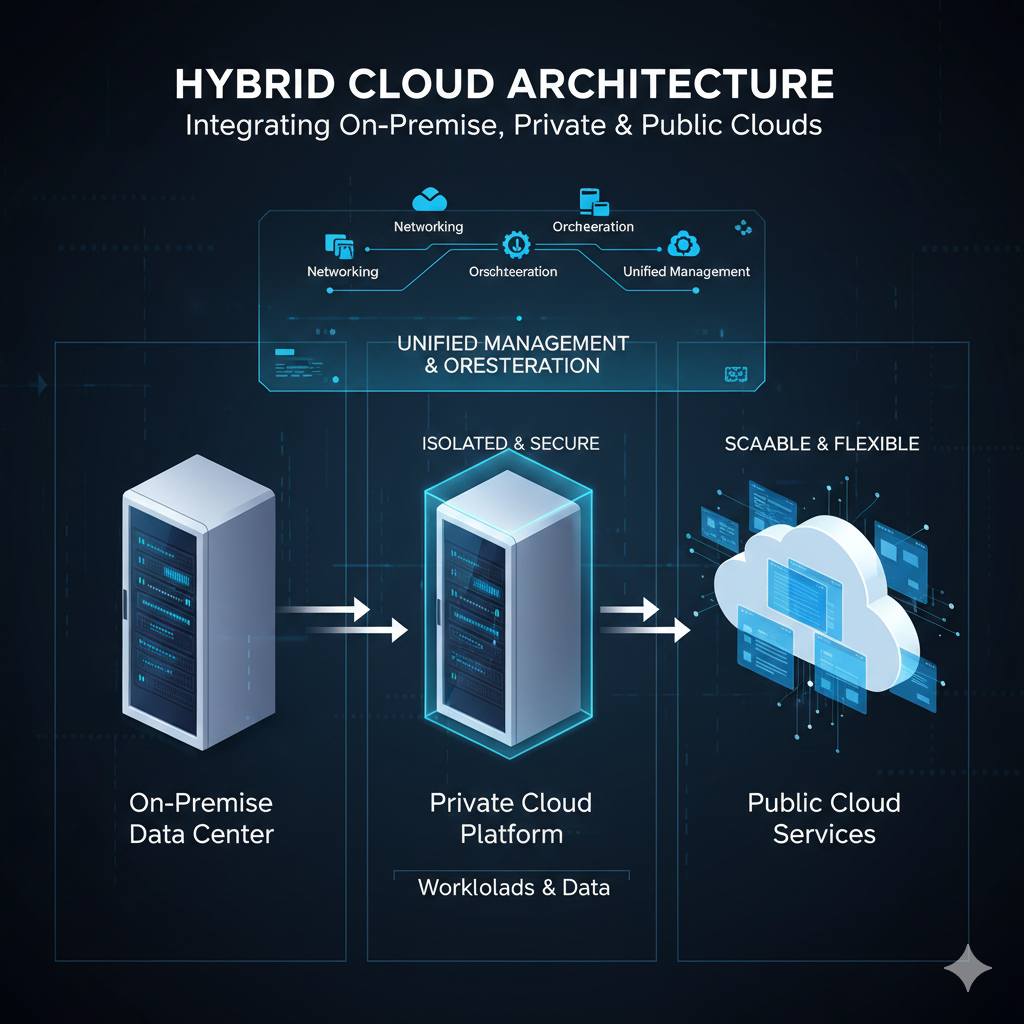
This structure allows workloads and data to move seamlessly between environments based on performance, compliance, or cost requirements.
Why Enterprises Choose Hybrid Models
Organizations often operate legacy systems alongside modern cloud-native applications. A hybrid approach allows businesses to:
- Preserve existing investments
- Gradually modernize infrastructure
- Maintain regulatory control
- Optimize workload placement
Hybrid cloud environment benefits extend beyond flexibility—they enable strategic evolution.
Key Hybrid Cloud Environment Benefits for Growing Enterprises
1. Scalability With Operational Control
One of the most significant hybrid cloud environment benefits is elastic scalability combined with governance.
Enterprises can:
- Use public cloud resources during peak demand
- Maintain critical workloads on private infrastructure
- Avoid overprovisioning hardware
- Scale without compromising compliance
This balance supports growth while maintaining operational oversight.
2. Cost Optimization and Financial Flexibility
Hybrid cloud models enable businesses to:
- Allocate high-performance workloads to public cloud
- Retain predictable workloads on private systems
- Reduce capital expenditure on hardware
- Implement usage-based cost structures
By distributing workloads strategically, enterprises maximize cost efficiency while maintaining performance standards.
3. Enhanced Security and Compliance
Security is often a primary concern during digital transformation. Hybrid cloud environment benefits include:
- Isolating sensitive data on private infrastructure
- Leveraging advanced public cloud security services
- Implementing unified identity and access management
- Maintaining compliance with regional regulations

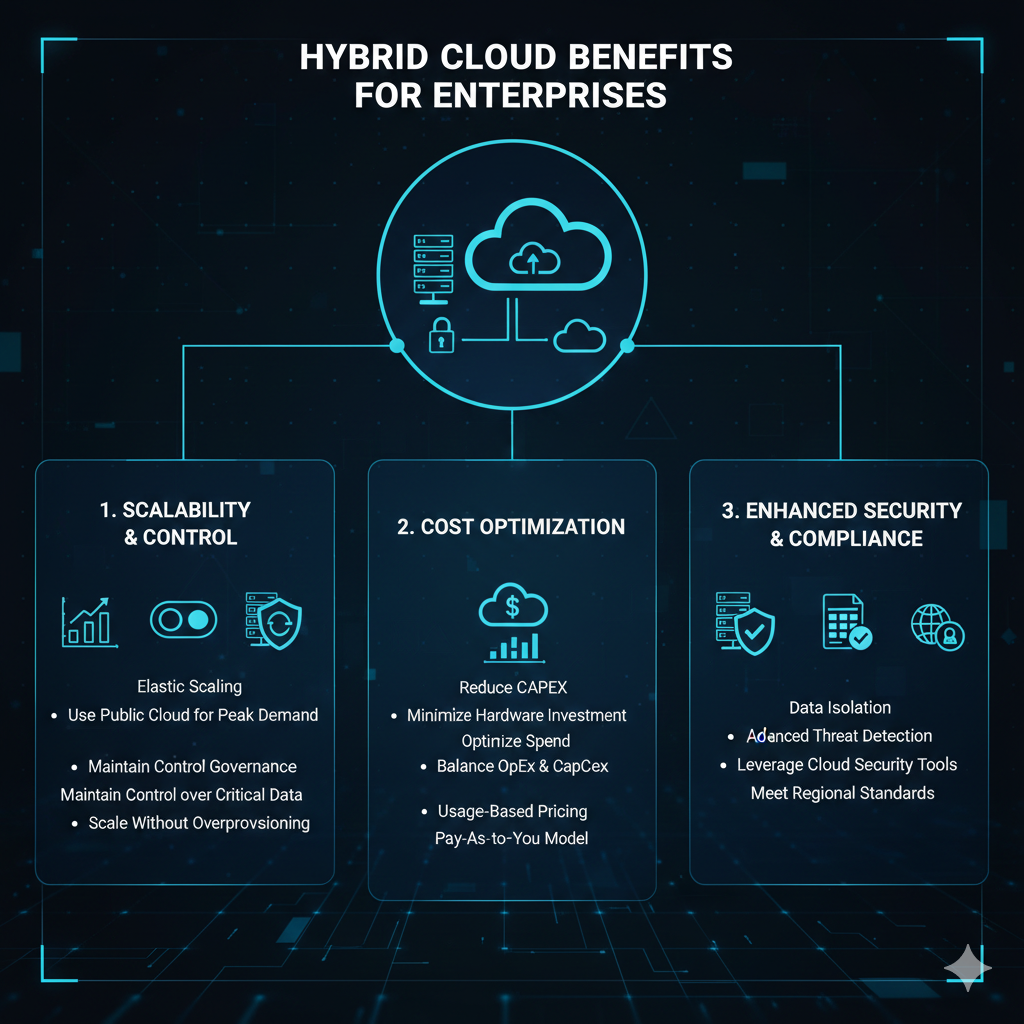
Hybrid environments provide layered security tailored to enterprise requirements.
Supporting Business Growth and Innovation
Enabling Digital Transformation
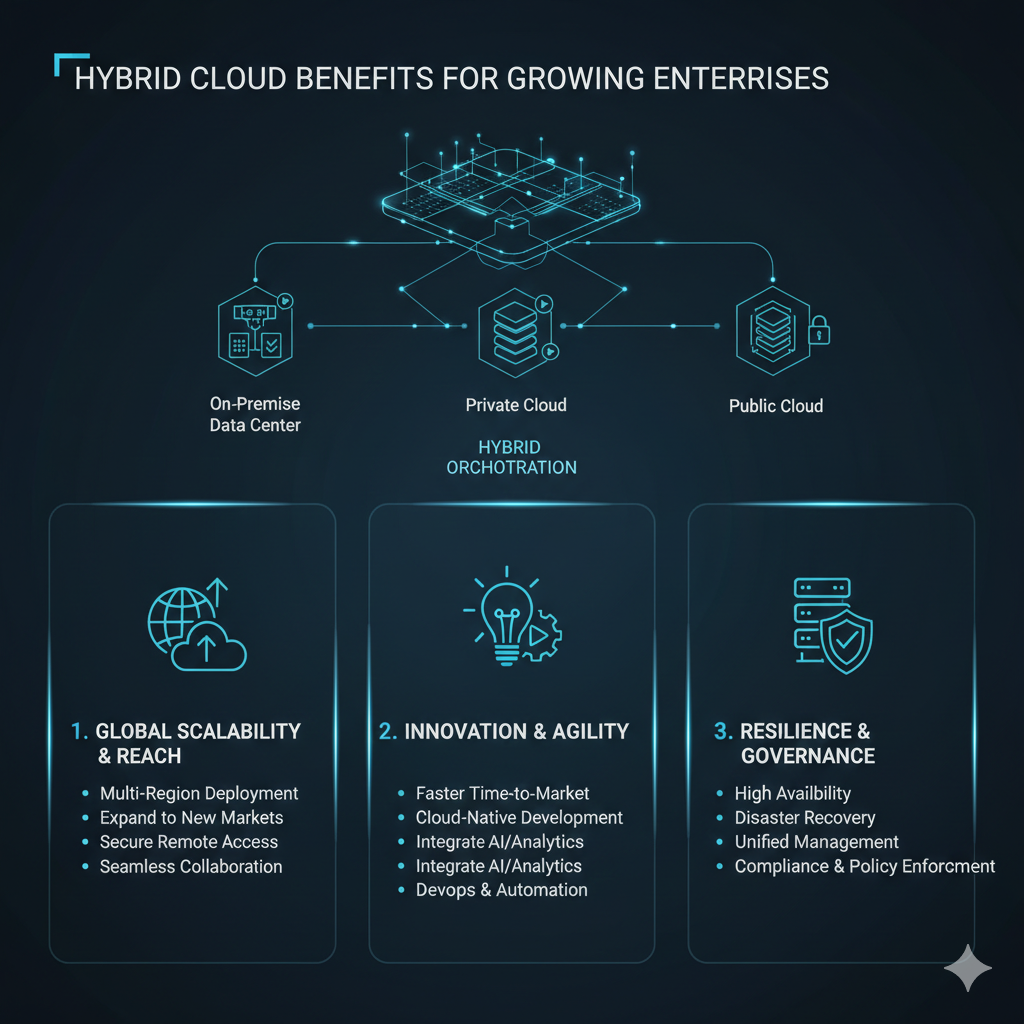
Hybrid cloud environments empower organizations to modernize gradually. Businesses can:
- Modernize applications incrementally
- Integrate AI and analytics tools
- Support DevOps and automation
- Experiment with cloud-native development
This flexibility reduces risk during transformation initiatives.
Faster Time-to-Market
Public cloud platforms provide rapid deployment capabilities. Combined with private systems, enterprises can:
- Launch products quickly
- Expand into new markets
- Test and scale applications efficiently
Hybrid cloud environment benefits directly impact innovation speed.
Operational Resilience and Continuity
High Availability and Disaster Recovery
Hybrid architectures enhance resilience by:
- Replicating workloads across environments
- Providing failover mechanisms
- Enabling cloud-based disaster recovery
Business continuity improves when infrastructure is diversified.
Minimizing Downtime
Enterprises can distribute workloads to prevent single points of failure. Hybrid cloud environment benefits include improved uptime and system reliability.
Data Management and Analytics Advantages
Flexible Data Placement
Hybrid models allow businesses to:
- Store regulated data locally
- Process analytics workloads in the public cloud
- Manage large datasets efficiently
Strategic data placement optimizes performance and compliance.
Real-Time Insights and AI Integration
Public cloud platforms often provide advanced analytics services. Hybrid environments allow enterprises to:
- Leverage AI-driven tools
- Analyze data at scale
- Maintain control over sensitive datasets
Data-driven decision-making becomes more powerful and secure.
Supporting Remote and Global Operations
Secure Access for Distributed Teams
Hybrid cloud environments enable:
- Secure remote connectivity
- Unified identity management
- Centralized monitoring
Growing enterprises benefit from seamless global collaboration.
Multi-Region Deployment
Organizations expanding internationally can deploy workloads in multiple regions while maintaining central governance.
Hybrid cloud environment benefits extend to global scalability and operational consistency.
Governance and Policy Management
Unified Management Frameworks
Modern hybrid cloud environments integrate centralized dashboards and orchestration tools that allow enterprises to:
- Monitor workloads across environments
- Enforce compliance policies
- Maintain consistent configurations
Governance becomes streamlined rather than fragmented.
Balancing Innovation With Risk Management
Hybrid environments allow businesses to innovate rapidly in public cloud environments while safeguarding critical systems in private infrastructure.
This dual capability reduces operational risk during expansion.
Addressing Common Hybrid Cloud Challenges
Complexity Management
While hybrid models offer flexibility, they require:
- Strong architecture planning
- Automation tools
- Skilled IT teams
Proper strategy maximizes hybrid cloud environment benefits.
Integration and Interoperability
Enterprises must ensure seamless connectivity between environments through standardized APIs and secure networking.
Strategic implementation prevents operational silos.
Future Outlook for Hybrid Cloud Environments
Increasing Adoption Among Enterprises
Hybrid strategies are becoming standard among mid-sized and large enterprises seeking both agility and control, particularly when guided by long-term technology roadmap planning aligned with business growth objectives.
As digital ecosystems expand, hybrid models will continue to evolve.
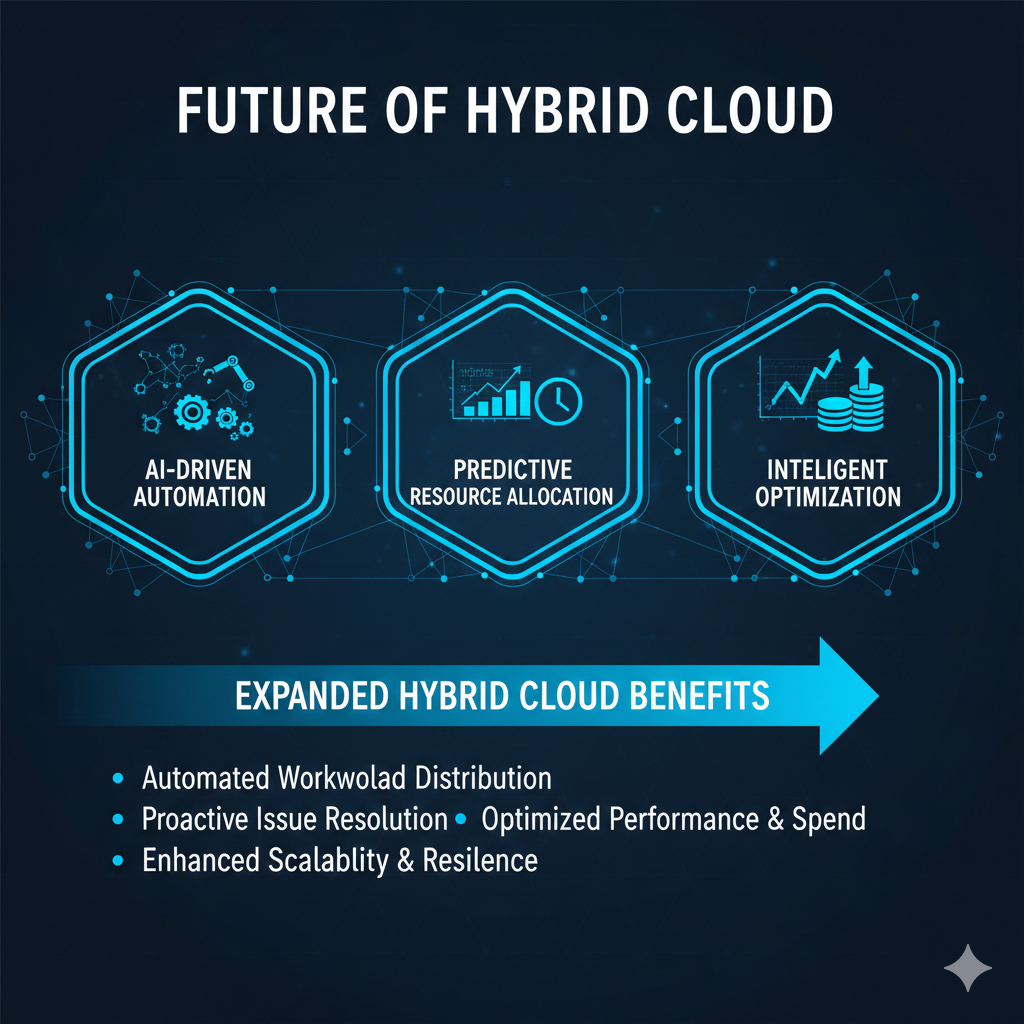
AI-Driven Hybrid Infrastructure
Emerging technologies will enable:
- Automated workload distribution
- Predictive resource allocation
- Intelligent cost optimization
Hybrid cloud environment benefits will expand as automation matures.
Conclusion
Hybrid cloud environments provide a strategic balance between flexibility and control. For growing enterprises, the hybrid cloud environment benefits include scalable growth, cost optimization, enhanced security, and operational resilience.
By adopting well-architected hybrid solutions, organizations can innovate confidently while maintaining governance and compliance. With expert guidance from EMPATH TECH FZCO, enterprises can design hybrid cloud strategies that support sustainable growth, secure operations, and long-term digital transformation success.