
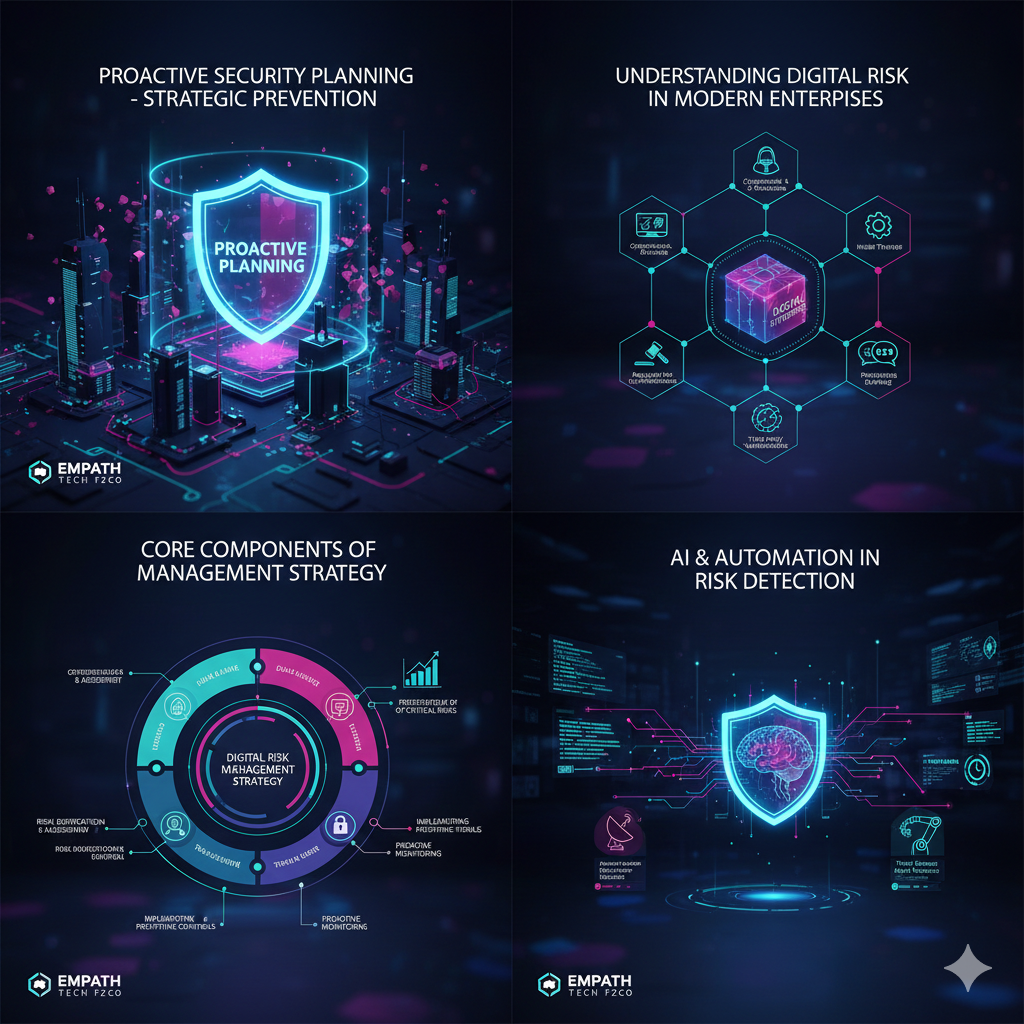
In an era where cyber threats evolve daily and digital transformation accelerates across industries, organizations must shift from reactive defense to strategic prevention. EMPATH TECH FZCO supports enterprises in building resilient ecosystems designed to anticipate, identify, and mitigate threats before they escalate. At the core of this transformation lies a well-defined digital risk management strategy—a structured approach to minimizing vulnerabilities while supporting innovation and growth.
Digital risk is no longer limited to cybersecurity breaches. It includes operational disruptions, compliance failures, third-party vulnerabilities, and reputational damage. Proactive security planning enables businesses to manage these risks systematically and sustainably.
Understanding Digital Risk in Modern Enterprises
What Is Digital Risk?
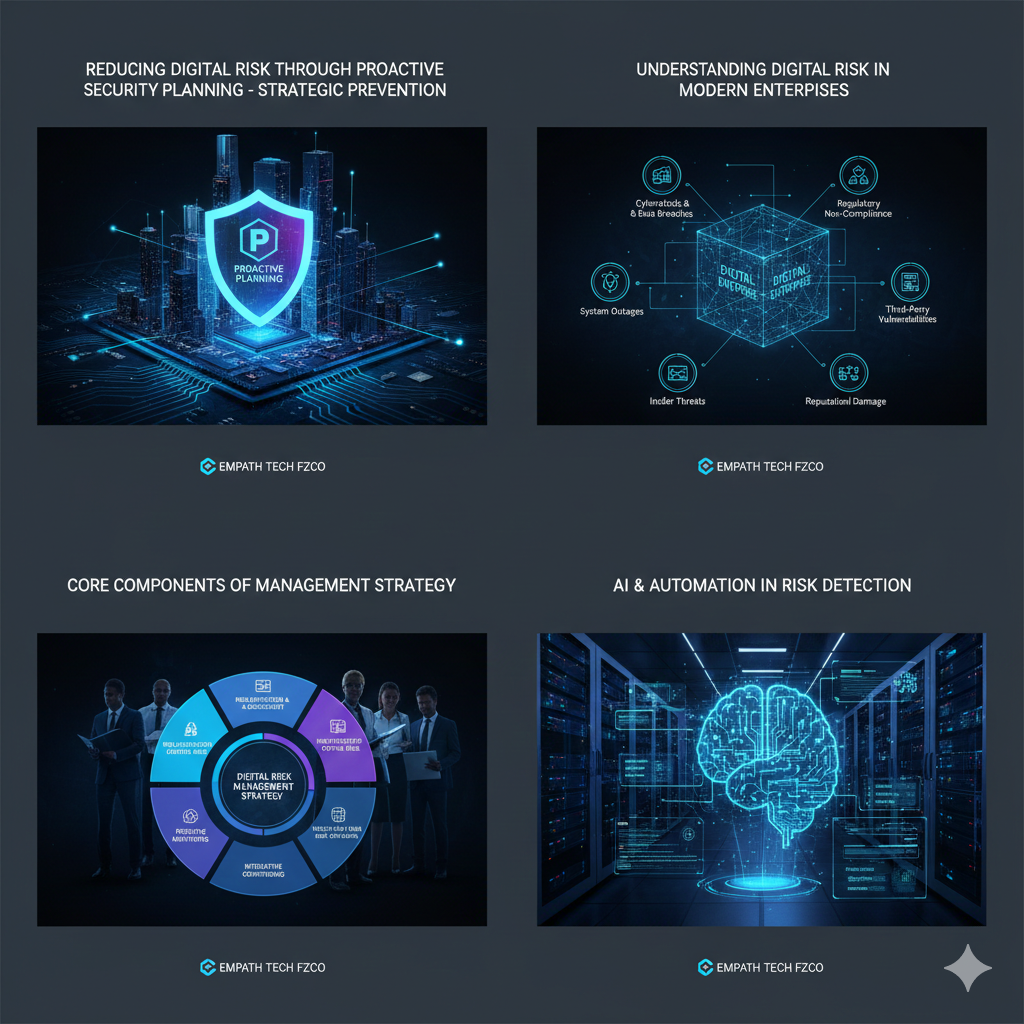
Digital risk refers to potential threats that arise from the use of digital technologies, cloud platforms, interconnected systems, and data-driven operations. These risks may include:
- Cyberattacks and data breaches
- System outages
- Insider threats
- Regulatory non-compliance
- Third-party vulnerabilities
- Reputational damage
A comprehensive digital risk management strategy addresses all these dimensions.
Why Reactive Security Is No Longer Enough
Traditional security models focus on responding after incidents occur. However, reactive approaches often result in:
- Extended downtime
- Financial losses
- Legal penalties
- Erosion of customer trust
Proactive security planning shifts focus toward prevention, detection, and resilience.
Core Components of a Digital Risk Management Strategy
1. Risk Identification and Assessment
The foundation of any digital risk management strategy begins with identifying vulnerabilities. Organizations should:
- Map critical assets and data flows
- Analyze potential threat vectors
- Conduct vulnerability assessments
- Evaluate third-party dependencies
Comprehensive assessment enables informed mitigation planning.
2. Prioritization of Critical Risks
Not all risks carry equal impact. Businesses must evaluate:
- Likelihood of occurrence
- Potential financial and operational consequences
- Regulatory implications
- Reputational impact
Risk prioritization ensures resources are allocated effectively.
3. Implementing Preventive Controls
Preventive controls are essential to reduce digital risk exposure. These may include:
- Identity and access management (IAM)
- Multi-factor authentication (MFA)
- Network segmentation
- Encryption protocols
- Secure configuration management
Preventive controls form the first line of defense within a structured enterprise cybersecurity framework designed to reduce organizational risk exposure.
Proactive Monitoring and Threat Detection
Continuous Security Monitoring
Modern enterprises must adopt real-time monitoring tools that:
- Detect anomalous activity
- Identify configuration drift
- Monitor system health
- Provide automated alerts
Continuous monitoring strengthens digital risk management strategy effectiveness.
AI and Automation in Risk Detection
Artificial intelligence enhances proactive security by:
- Identifying unusual behavior patterns
- Predicting potential attack vectors
- Automating threat response
AI-driven security tools reduce response times and limit damage.

Integrating Governance and Compliance
Establishing Clear Security Policies
A digital risk management strategy must include governance frameworks that define:
- Access control policies
- Data classification standards
- Incident response protocols
- Vendor risk management procedures
Policy clarity strengthens organizational resilience.
Continuous Compliance Oversight
Regulatory compliance should be monitored continuously rather than periodically. Automated compliance tools ensure:
- Real-time audit tracking
- Regulatory reporting
- Enforcement of data protection standards
Compliance integration reduces legal exposure.
Third-Party and Supply Chain Risk Management
Evaluating Vendor Security Posture
Enterprises increasingly depend on external vendors and cloud providers. Digital risk management strategies should include:
- Vendor risk assessments
- Security audits
- Contractual security requirements
- Continuous monitoring of third-party access
Supply chain vulnerabilities must be addressed proactively.
Securing API and Integration Points
As systems integrate, APIs become critical access points. Securing them involves:
- Authentication controls
- Rate limiting
- Secure gateways
- Regular penetration testing
Integration security is a vital component of risk reduction.
Incident Response and Business Continuity Planning
Developing an Incident Response Plan
Preparation reduces impact during security incidents. Effective plans should outline:
- Clear escalation paths
- Communication protocols
- Containment and recovery procedures
- Post-incident analysis
Structured response minimizes operational disruption.
Business Continuity and Disaster Recovery
A strong digital risk management strategy incorporates:
- Automated backups
- Multi-region redundancy
- Disaster recovery testing
- Failover mechanisms
Resilience ensures continuity even during major disruptions as part of a comprehensive business continuity planning within IT operations strategy.
Building a Security-Aware Culture
Employee Training and Awareness
Human error remains a leading cause of digital risk. Organizations should:
- Conduct cybersecurity training programs
- Simulate phishing attacks
- Encourage incident reporting
A security-conscious workforce strengthens overall defense.
Leadership Involvement
Executive leadership must prioritize proactive security planning. Board-level engagement ensures:
- Adequate resource allocation
- Alignment between business goals and risk management
- Strategic oversight
Digital risk management becomes a business priority.

Measuring and Improving Risk Management Effectiveness
Key Risk Indicators (KRIs)
Organizations should monitor metrics such as:
- Incident frequency
- Response time
- System uptime
- Compliance audit results
Tracking performance supports continuous improvement.
Continuous Risk Assessment
Digital environments evolve rapidly. Regular reassessment ensures the digital risk management strategy remains aligned with emerging threats.
Benefits of Proactive Security Planning
A strong digital risk management strategy delivers:
- Reduced likelihood of breaches
- Improved regulatory compliance
- Enhanced operational resilience
- Stronger customer trust
- Long-term financial stability
Proactive planning transforms risk management from a defensive measure into a strategic advantage.
The Future of Digital Risk Management
Emerging technologies will further enhance digital risk management strategies, including:
- AI-driven predictive security
- Automated risk scoring systems
- Behavioral analytics
- Secure-by-design architecture
Organizations that embrace proactive approaches will be better prepared for evolving threats.
Conclusion
Reducing digital risk requires more than isolated security measures—it demands a comprehensive and proactive digital risk management strategy. By identifying vulnerabilities, implementing preventive controls, monitoring continuously, and fostering a security-aware culture, businesses can minimize exposure and strengthen resilience.
With strategic expertise from EMPATH TECH FZCO, enterprises can design and execute digital risk management strategies that protect critical assets while supporting innovation and growth. In an increasingly interconnected world, proactive security planning is not just protective—it is foundational to long-term business success.