
In today’s digital-first economy, technology decisions directly influence competitiveness, efficiency, and long-term growth. Organizations can no longer treat IT as a support function operating independently from business strategy. EMPATH TECH FZCO partners with enterprises to design structured governance models that ensure technology investments deliver measurable business value. At the heart of this alignment lies a well-defined IT governance framework—a structured approach that connects IT operations with organizational objectives.
Without clear governance, IT initiatives often become fragmented, budgets spiral, security gaps emerge, and innovation slows. This article explores how businesses can leverage an IT governance framework to align technology with strategic goals, improve operational performance, and strengthen long-term resilience.
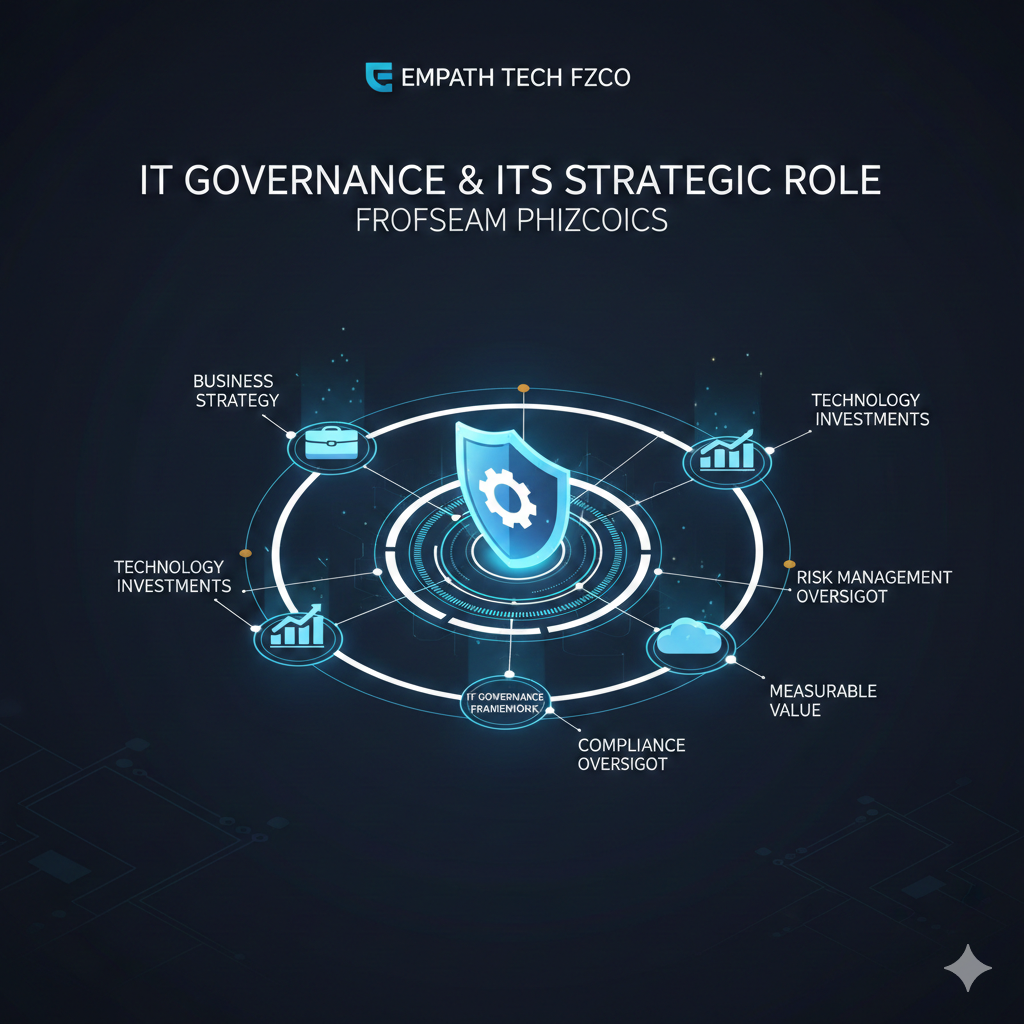
Understanding IT Governance and Its Strategic Role
What Is an IT Governance Framework?
An IT governance framework is a structured set of policies, processes, and controls that ensure IT systems and investments support business objectives. It defines:
- Decision-making authority
- Accountability structures
- Performance measurement standards
- Risk management processes
- Compliance oversight
Rather than focusing solely on technical performance, an IT governance framework ensures technology contributes to strategic business outcomes.
Why IT Governance Matters More Than Ever
Digital transformation, cloud adoption, remote work, and cybersecurity threats have increased IT complexity. Organizations without structured governance often face:
- Misaligned technology investments
- Security vulnerabilities
- Inefficient resource allocation
- Regulatory compliance risks
A strong IT governance framework, supported by structured structured IT governance practices, provides clarity, oversight, and measurable accountability.
Aligning IT Strategy with Business Objectives
Translating Business Goals into IT Initiatives
The first step in effective governance is aligning technology strategy with corporate objectives. This requires:
- Understanding business growth targets
- Identifying operational challenges
- Defining measurable KPIs
- Mapping IT capabilities to strategic priorities
An IT governance framework ensures technology investments directly support revenue growth, cost optimization, and innovation.
Executive and Board-Level Involvement
Technology decisions should not be isolated within IT departments. Leadership involvement ensures:
- Budget alignment with strategic initiatives
- Risk oversight at executive level
- Clear accountability for performance
Board-level governance strengthens enterprise-wide alignment.

Core Components of an Effective IT Governance Framework
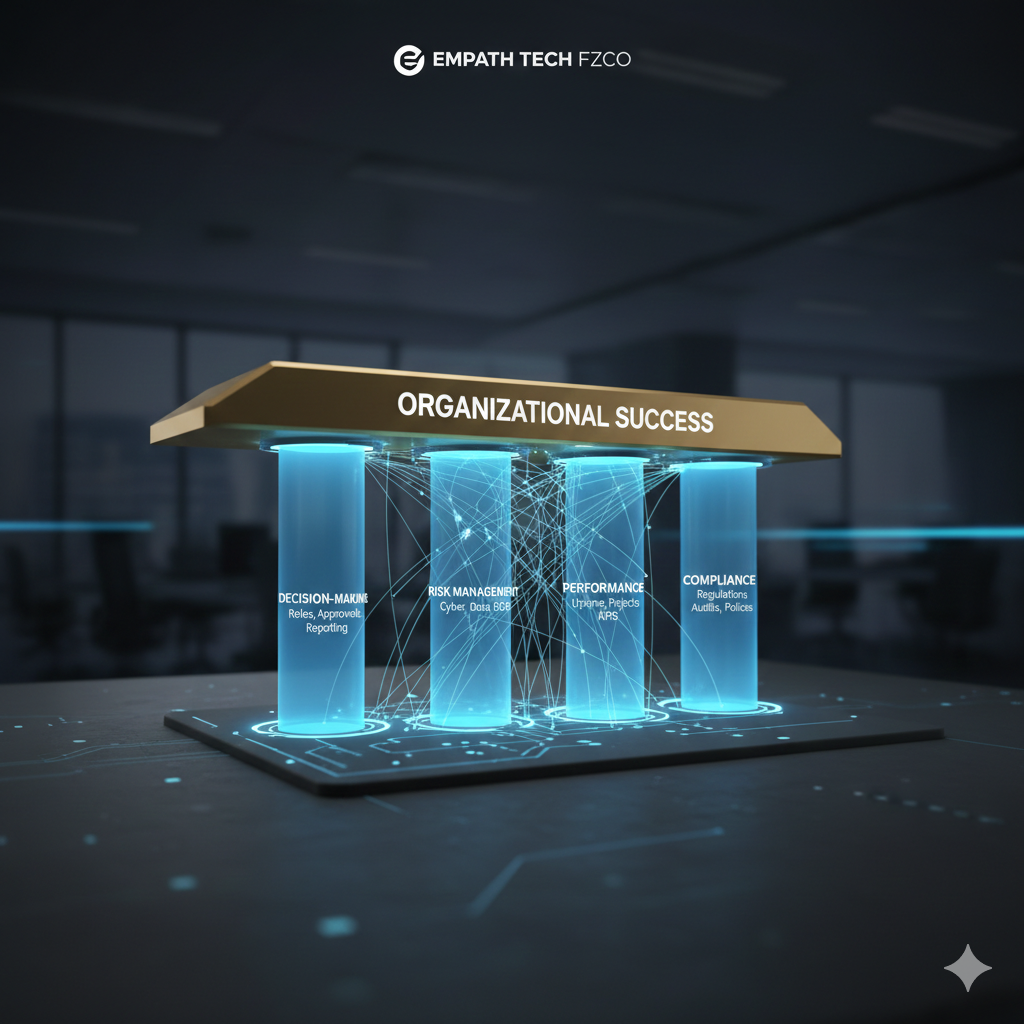
1. Clear Decision-Making Structures
Governance requires clearly defined roles and responsibilities. Organizations should establish:
- IT steering committees
- Risk and compliance oversight teams
- Defined approval workflows
- Transparent reporting mechanisms
Clear structures reduce ambiguity and improve accountability.
2. Risk Management and Cybersecurity Integration
Risk management is central to IT governance. A strong IT governance framework incorporates:
- Cybersecurity policies
- Data protection standards
- Incident response planning
- Business continuity strategies
Technology risks must be assessed and managed proactively.
3. Performance Measurement and KPIs
Effective governance requires measurable performance indicators, such as:
- System uptime
- Project delivery timelines
- Security incident metrics
- Cost efficiency benchmarks
Performance tracking ensures continuous improvement.
Integrating IT Operations into Governance
Operational Excellence as a Governance Priority
IT governance is not only strategic—it directly impacts daily operations. Governance frameworks must ensure:
- Reliable infrastructure performance
- Efficient service management
- Clear change management processes
- Structured incident resolution procedures
Operational discipline, reinforced through effective IT operations management, strengthens alignment with business goals.
IT Service Management (ITSM) Best Practices
Many organizations adopt structured methodologies such as ITIL to support governance. ITSM best practices include:
- Defined service catalogs
- SLA monitoring
- Continuous service improvement
- Change and release management
Operational frameworks reinforce governance structures.
Cloud Governance and Digital Transformation
Governing Cloud Environments
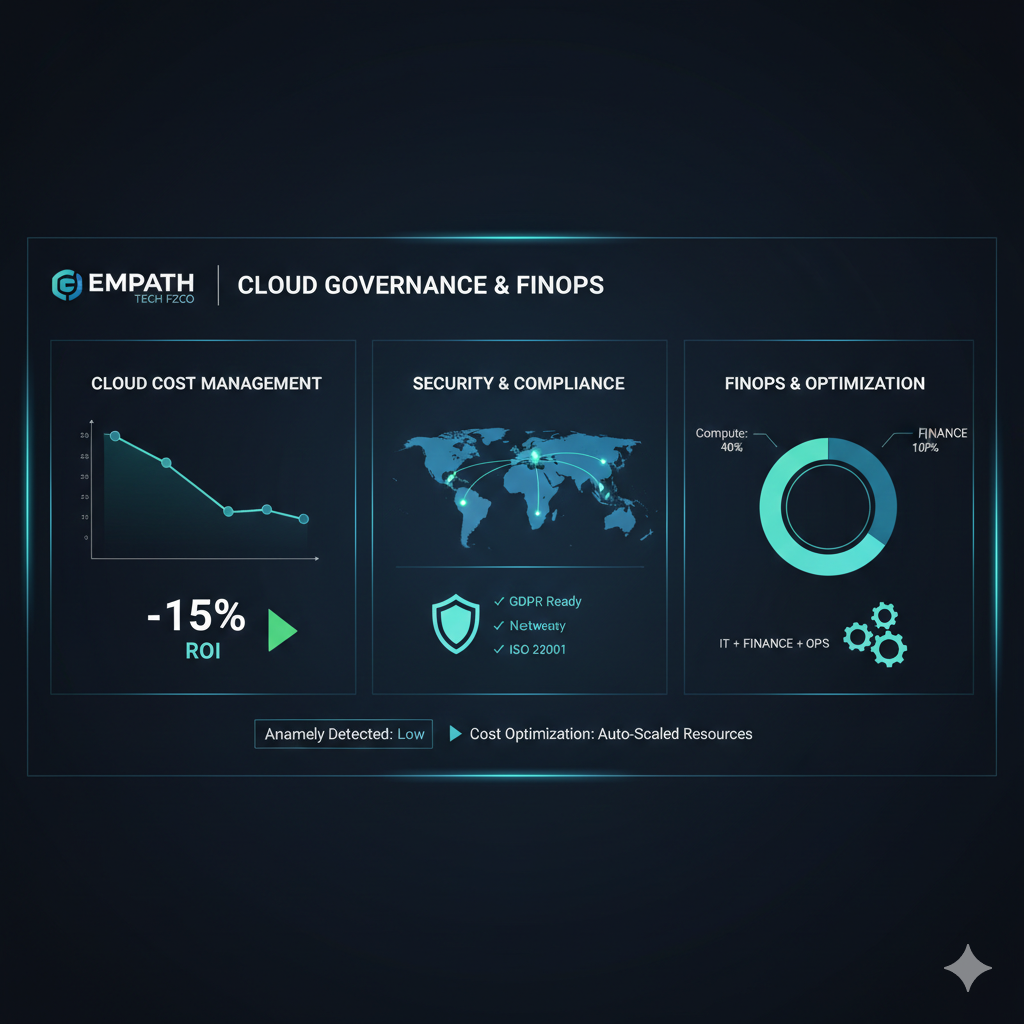
As enterprises migrate to cloud platforms, governance becomes more complex. An IT governance framework must address:
- Cloud cost management
- Data residency and compliance
- Shared responsibility models
- Secure configuration standards
Cloud governance ensures scalable and secure operations.
Supporting Innovation Without Increasing Risk
Digital transformation requires agility, but governance ensures innovation does not compromise:
- Security
- Compliance
- Financial oversight
- Operational stability
Balanced governance fosters sustainable innovation.
Financial Governance and IT Investment Management
Optimizing IT Spending
An IT governance framework ensures financial transparency through:
- Budget forecasting
- Cost tracking
- ROI evaluation
- Portfolio management
Financial discipline ensures technology investments generate value.
Aligning IT and Finance Through FinOps
In cloud-driven environments, FinOps practices integrate IT, finance, and operations teams to manage costs effectively.
Governance bridges the gap between technology performance and financial accountability.
Compliance and Regulatory Oversight
Ensuring Regulatory Alignment
Organizations operating in regulated industries must ensure that IT systems comply with:
- Data privacy regulations
- Industry-specific compliance standards
- International cybersecurity laws
Governance frameworks formalize compliance monitoring.
Audit and Reporting Mechanisms
An effective IT governance framework includes:
- Regular internal audits
- Compliance reporting dashboards
- Risk documentation
- Policy review cycles
Audit readiness strengthens organizational credibility.
Strengthening Organizational Accountability
Defining Ownership and Accountability
Governance requires clarity around who is responsible for:
- Data management
- Security controls
- Project outcomes
- Budget adherence
Clear accountability structures reduce operational risk.
Building a Culture of Responsibility
IT governance is not only about policies—it requires a culture that values:
- Transparency
- Continuous improvement
- Risk awareness
- Collaboration across departments
Cultural alignment enhances governance effectiveness.
Leveraging Automation and Technology in Governance
Automated Monitoring and Reporting
Modern governance frameworks leverage automation tools for:
- Real-time compliance monitoring
- Performance analytics
- Security event tracking
- Cost optimization
Automation increases efficiency and reduces human error.
Data-Driven Governance Decisions
Advanced analytics enable leadership to make informed decisions based on:
- Operational performance data
- Security metrics
- Financial trends
- User behavior insights
Data-driven governance improves strategic alignment.
Overcoming Common Governance Challenges
Breaking Down Silos
Siloed departments often hinder governance effectiveness. Cross-functional collaboration is essential for:
- Unified reporting
- Shared accountability
- Transparent communication
Integration improves oversight.
Balancing Agility with Control
Overly rigid governance can slow innovation, while weak governance increases risk. A successful IT governance framework strikes a balance between flexibility and oversight.
The Long-Term Benefits of a Strong IT Governance Framework
A mature IT governance framework delivers:
- Strategic alignment between IT and business
- Improved risk management
- Enhanced cybersecurity resilience
- Optimized technology spending
- Greater operational efficiency
- Increased stakeholder trust
Governance transforms IT from a cost center into a strategic asset.
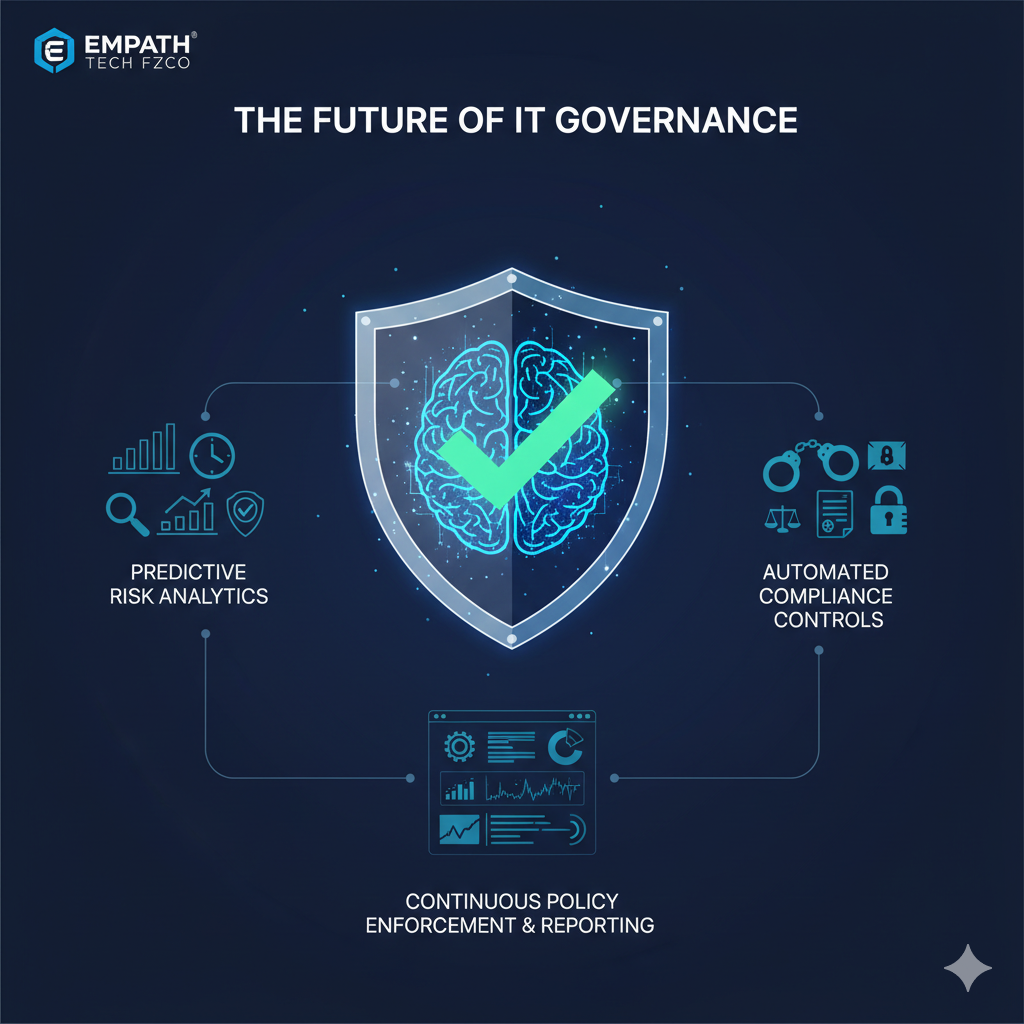
The Future of IT Governance
As organizations continue adopting AI, automation, and cloud technologies, IT governance frameworks will increasingly incorporate:
- Predictive risk analytics
- Automated compliance controls
- Continuous policy enforcement
- Integrated digital dashboards
Future-ready governance models will be dynamic, data-driven, and adaptive.
Conclusion
Aligning technology with business objectives requires more than technical expertise—it demands structured oversight, accountability, and measurable performance standards. A comprehensive IT governance framework ensures that IT operations, cybersecurity, financial management, and digital transformation initiatives support long-term strategic goals.
With expert guidance from EMPATH TECH FZCO, enterprises can design and implement IT governance frameworks that strengthen operational resilience, optimize investment decisions, and drive sustainable growth. In an increasingly complex digital landscape, effective IT governance is not optional—it is foundational to business success.