
As organizations accelerate digital transformation and adopt cloud-first strategies, safeguarding sensitive information becomes more complex and more critical than ever. EMPATH TECH FZCO partners with enterprises to design secure, resilient cloud architectures that prioritize data integrity, compliance, and operational continuity. In a distributed and highly connected ecosystem, implementing effective enterprise data protection solutions is essential for minimizing risk and ensuring sustainable growth.
Cloud-first environments provide scalability, flexibility, and cost efficiency—but they also introduce new attack surfaces and governance challenges. This article explores how businesses can protect enterprise data in cloud-first environments through practical, layered, and strategic approaches.
Understanding the Cloud-First Landscape
What Is a Cloud-First Environment?
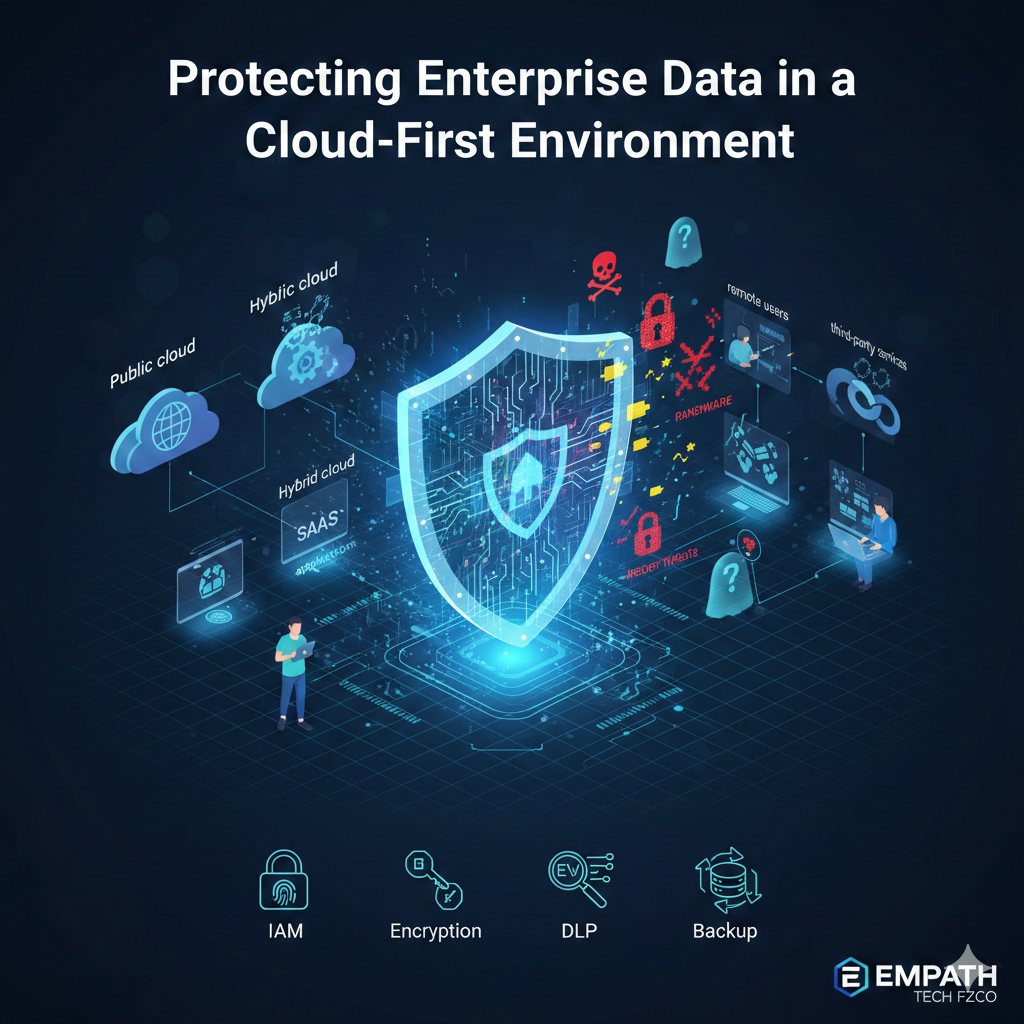
A cloud-first strategy prioritizes cloud-based platforms and services over traditional on-premise infrastructure. Organizations adopting this model typically rely on:
- Public cloud platforms
- Hybrid cloud architectures
- SaaS applications
- Distributed storage systems
- API-driven integrations
While cloud-first environments improve agility, they require advanced enterprise data protection solutions to mitigate evolving risks.
Why Data Protection Becomes More Complex in the Cloud
In cloud ecosystems, data is often:
- Distributed across regions
- Shared between applications
- Accessed by remote users
- Processed by third-party services
This complexity increases exposure to threats, misconfigurations, and compliance violations.
Core Risks in Cloud-First Environments
Misconfiguration and Access Control Gaps
One of the most common risks in cloud-first environments is misconfigured permissions. Weak access policies can lead to:
- Unauthorized data exposure
- Insider threats
- Privilege escalation attacks
Enterprise data protection solutions must prioritize identity and access governance.
Data Breaches and Ransomware
Cybercriminals target cloud systems through phishing, malware, and ransomware campaigns. Without strong safeguards, enterprises risk:
- Financial losses
- Regulatory penalties
- Reputational damage
Proactive data protection is essential.
Compliance and Regulatory Challenges
Cloud-based data often spans multiple jurisdictions, requiring adherence to regulations such as:
- GDPR
- Industry-specific compliance standards
- Data localization requirements
Enterprise data protection solutions must address regulatory obligations across regions.
Key Components of Enterprise Data Protection Solutions
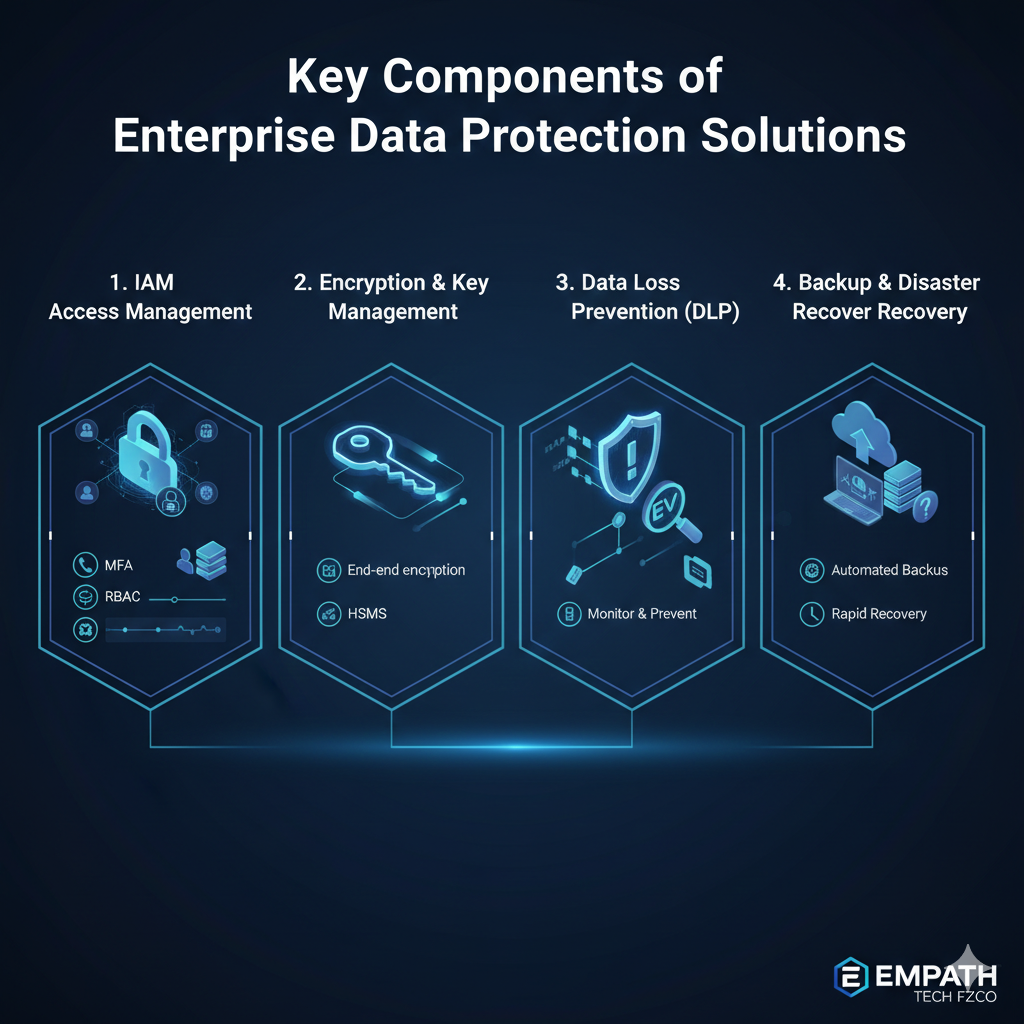
1. Identity and Access Management (IAM)
Strong IAM controls are foundational to protecting enterprise data. Effective IAM includes:
- Role-based access controls
- Multi-factor authentication (MFA)
- Least-privilege principles
- Continuous user monitoring
Limiting access reduces the risk of unauthorized exposure.
2. Encryption and Key Management
Encryption protects data at rest and in transit. Best practices include:
- End-to-end encryption
- Secure key lifecycle management
- Hardware security modules (HSMs)
- Automated key rotation
Encryption ensures data remains protected even if systems are compromised.
3. Data Loss Prevention (DLP)
Enterprise data protection solutions often include DLP technologies that:
- Monitor data transfers
- Detect sensitive information leaks
- Prevent unauthorized sharing
DLP tools help maintain confidentiality and compliance.
4. Backup and Disaster Recovery
Data protection must include robust backup strategies such as:
- Automated cloud backups
- Geo-redundant storage
- Rapid recovery mechanisms
Resilient recovery plans minimize downtime during incidents.
Zero Trust Architecture in Cloud-First Security
Moving Beyond Perimeter Security
Traditional perimeter-based security models are insufficient in cloud-first environments. Zero Trust architecture assumes no user or system is automatically trusted.
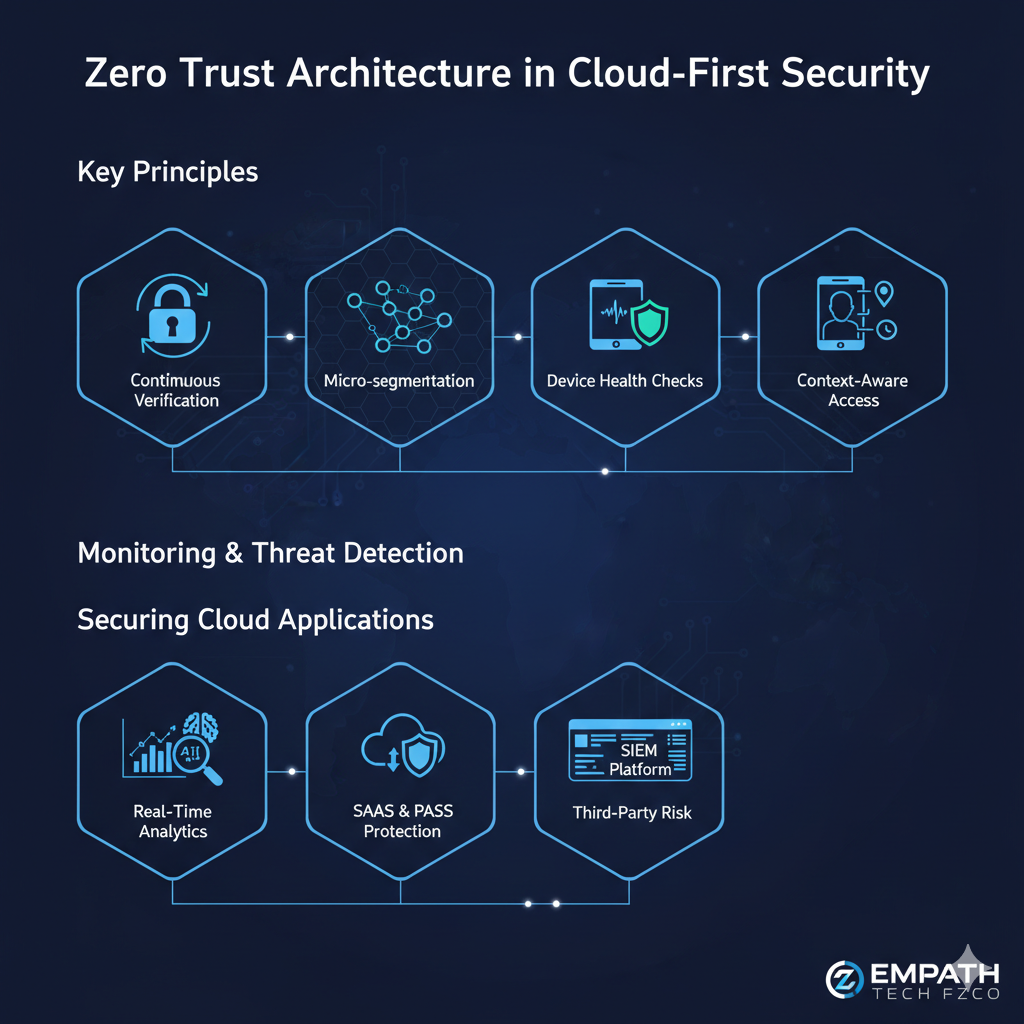
Zero Trust principles include:
- Continuous verification
- Micro-segmentation
- Device health checks
- Context-aware access controls
Enterprise data protection solutions increasingly rely on Zero Trust principles as part of a comprehensive enterprise cybersecurity framework designed for cloud-first environments.
Continuous Monitoring and Threat Detection
Real-Time Security Analytics
Advanced monitoring systems enable organizations to:
- Detect anomalies
- Identify unusual access patterns
- Respond to threats quickly
AI-powered tools enhance threat detection capabilities.
Security Information and Event Management (SIEM)
SIEM platforms centralize logs and provide actionable insights, strengthening enterprise data protection strategies.
Securing Cloud Applications and APIs
Protecting SaaS and PaaS Environments
Cloud-first environments rely heavily on SaaS and PaaS platforms. Protection strategies include:
- Secure API gateways
- Application firewalls
- Continuous vulnerability scanning
Application-level security reduces exposure.
Managing Third-Party Risk
Cloud ecosystems often involve third-party vendors. Enterprise data protection solutions should include:
- Vendor risk assessments
- Secure integration standards
- Continuous monitoring of third-party access
Supply chain security is critical.
Governance and Compliance Frameworks
Establishing Data Governance Policies
Strong governance ensures clarity around:
- Data ownership
- Access permissions
- Retention policies
- Classification standards
Governance structures support long-term protection.
Continuous Compliance Monitoring
Cloud-first enterprises benefit from automated compliance tools that:
- Generate audit reports
- Detect configuration drift
- Enforce regulatory standards
Compliance becomes an ongoing process supported by structured regulatory compliance in cybersecurity strategies aligned with evolving global standards.ss.
Workforce Awareness and Security Culture
Employee Training and Awareness
Human error remains a significant risk factor. Businesses should:
- Conduct regular cybersecurity training
- Simulate phishing attacks
- Encourage reporting of suspicious activity
A security-aware culture enhances enterprise data protection.
Managing Remote Work Risks
Cloud-first environments enable remote access, increasing exposure. Secure access policies and endpoint protection are essential safeguards.
Best Practices for Protecting Enterprise Data
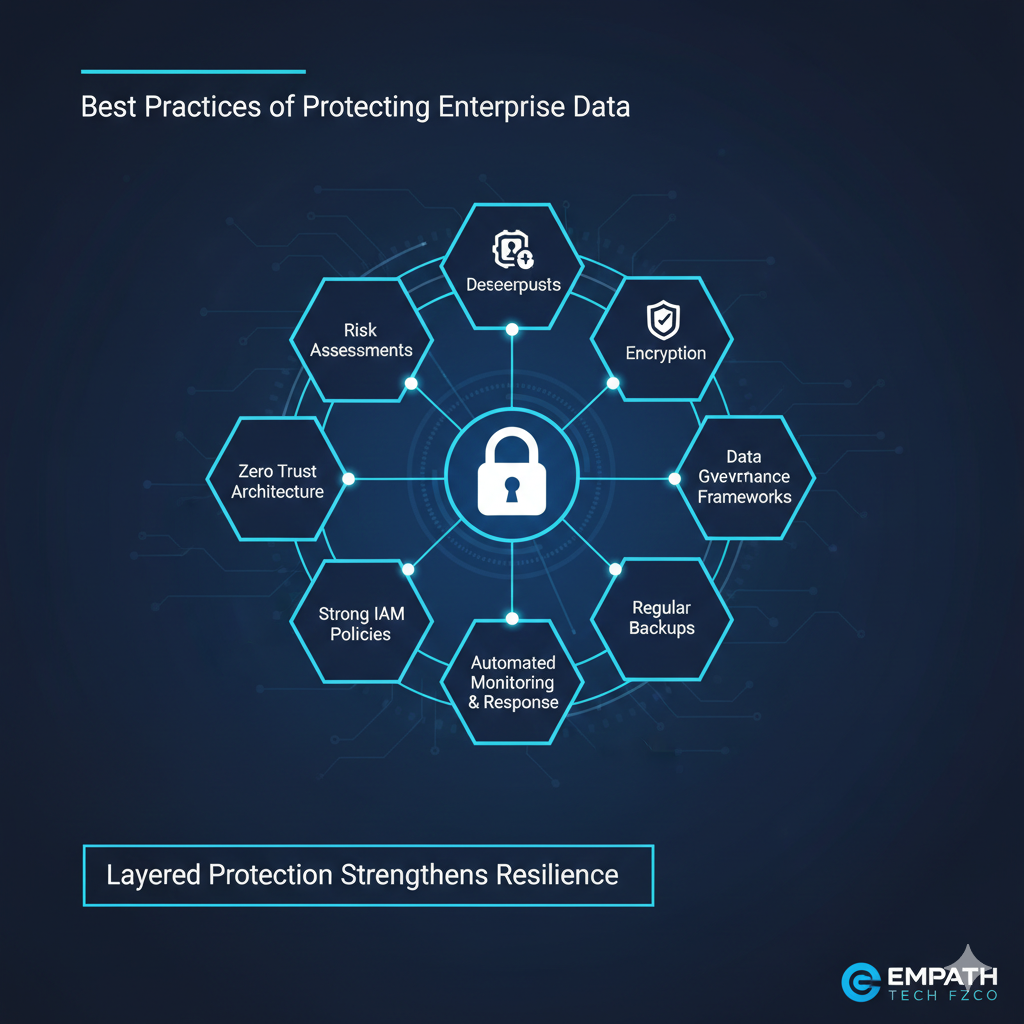
To implement effective enterprise data protection solutions, organizations should:
- Conduct regular risk assessments
- Implement Zero Trust architecture
- Enforce strong IAM policies
- Use encryption across all data flows
- Automate monitoring and incident response
- Maintain regular backups
- Establish governance frameworks
Layered protection strengthens resilience.
The Future of Enterprise Data Protection in Cloud Environments
Emerging technologies will continue shaping enterprise data protection solutions, including:
- AI-driven threat detection
- Automated security orchestration
- Privacy-enhancing computation
- Advanced behavioral analytics
Businesses must remain adaptable to evolving threat landscapes.
Conclusion
In cloud-first environments, protecting enterprise data requires more than traditional security measures. Effective enterprise data protection solutions integrate identity management, encryption, monitoring, governance, and disaster recovery into a unified strategy.
With guidance from EMPATH TECH FZCO, organizations can implement robust enterprise data protection solutions that secure critical information, ensure compliance, and support sustainable growth in a dynamic digital ecosystem. In today’s cloud-driven world, data protection is not just a technical requirement—it is a strategic business priority.