
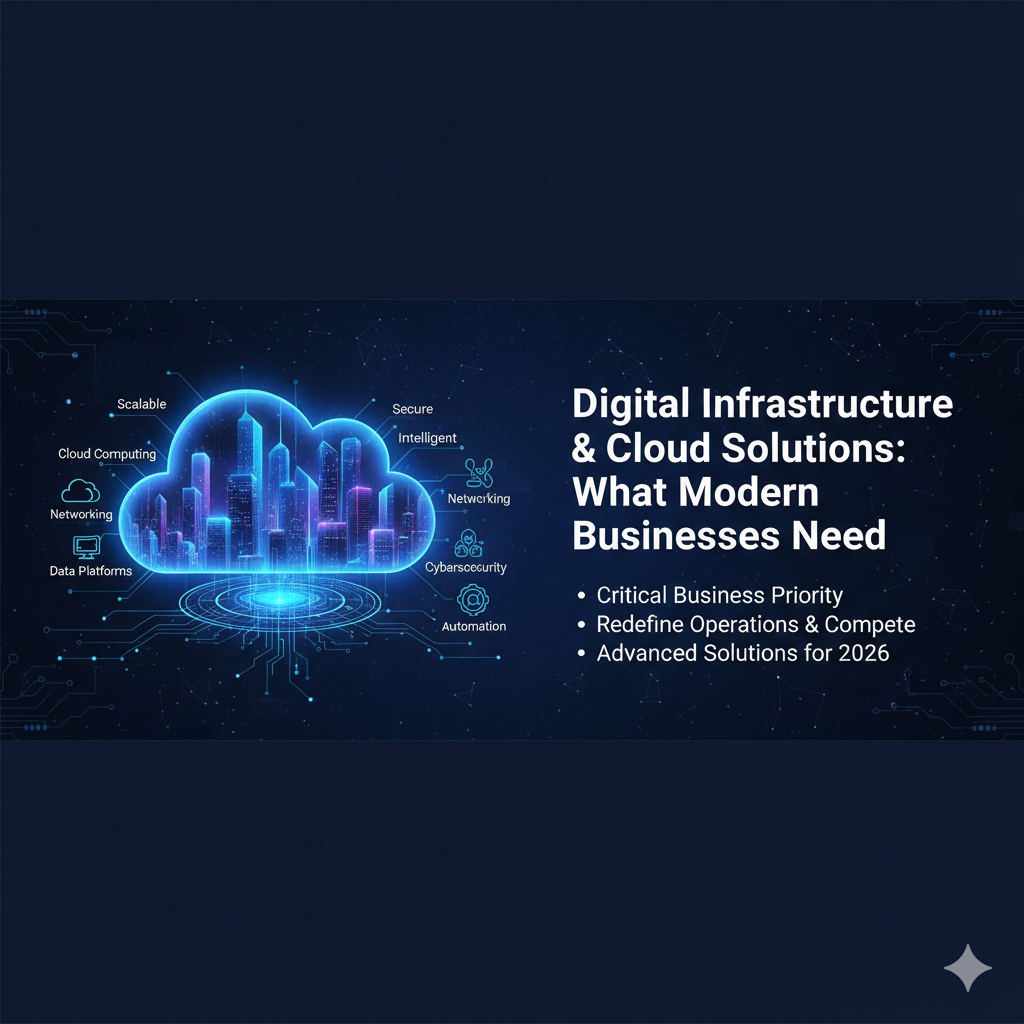
In today’s hyper-connected economy, Digital Infrastructure & Cloud Solutions: What Modern Businesses Need is no longer just a strategic discussion—it is a critical business priority. Organizations across industries are redefining how they operate, compete, and innovate through advanced digital infrastructure solutions that combine cloud computing, networking, data platforms, cybersecurity, and automation.
Modern businesses require infrastructure that is scalable, secure, resilient, and intelligent. Traditional IT systems built for stability and control are being replaced by agile digital ecosystems designed for speed, flexibility, and growth, often through structured IT infrastructure modernization initiatives that align technology capabilities with evolving business demands. As a trusted technology partner, EMPATH TECH FZCO supports enterprises in designing and deploying integrated digital infrastructure strategies that align with modern business demands and long-term growth objectives.
This article explores what modern digital infrastructure looks like, why it matters, and how organizations can implement effective digital infrastructure solutions—leveraging expertise from leading providers such as EMPATH TECH FZCO —to stay competitive in 2026 and beyond.
The Evolution of Digital Infrastructure
From Traditional IT to Digital Ecosystems
Historically, IT infrastructure focused on physical servers, on-premise data centers, and static networking environments. While these systems provided control, they lacked flexibility and scalability.
Modern digital infrastructure solutions are built around:
- Cloud-native architectures
- Virtualized and software-defined networks
- Distributed computing models
- API-driven integration
- Real-time data processing
Infrastructure is no longer just about hardware—it is about enabling digital capabilities across the enterprise.
Infrastructure as a Business Enabler
Digital infrastructure is now directly tied to business performance. It enables:
- Faster product development
- Seamless customer experiences
- Global scalability
- Data-driven decision-making
Companies that invest in robust digital infrastructure solutions gain a competitive edge through agility and innovation.
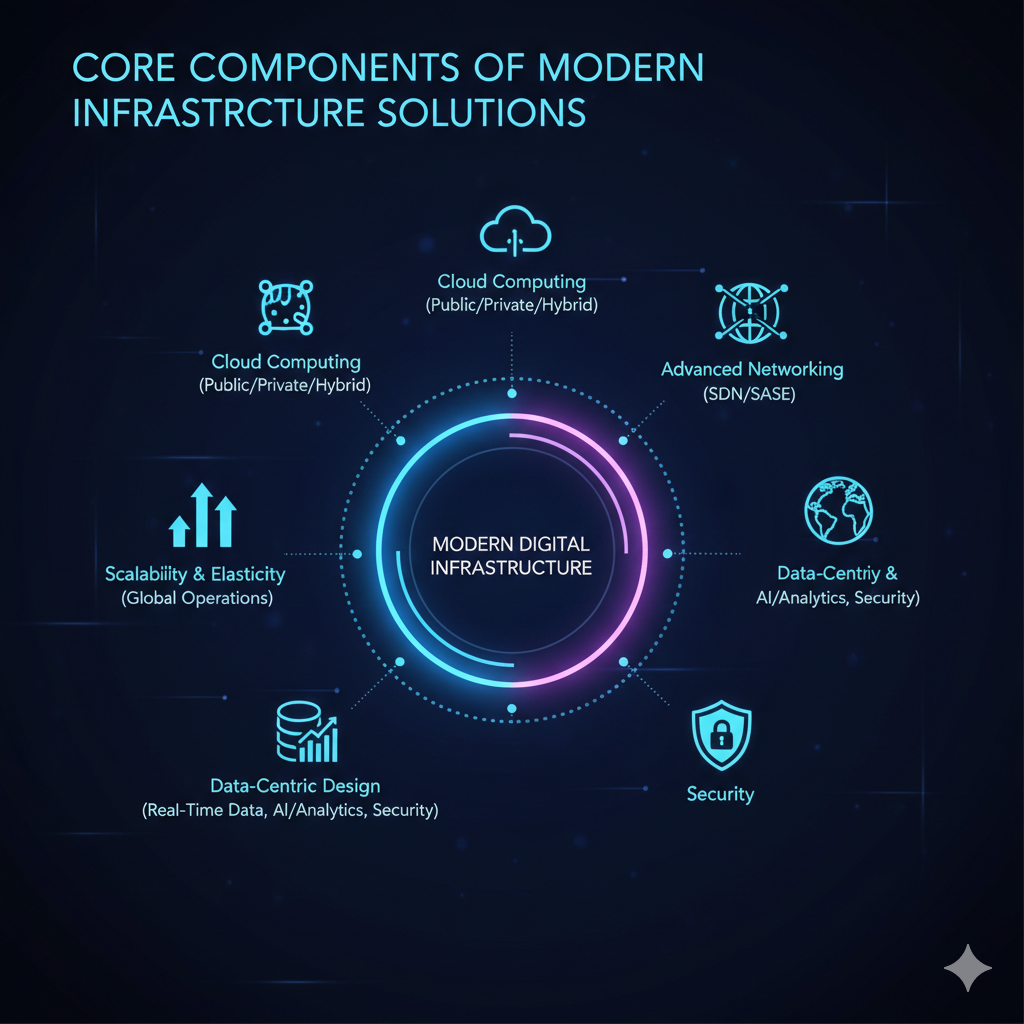
Core Components of Modern Digital Infrastructure Solutions
Cloud Computing as the Foundation
Cloud computing forms the backbone of modern infrastructure, providing the foundation for a scalable cloud architecture that supports long-term digital growth. Businesses rely on:
- Public cloud services
- Private cloud environments
- Hybrid and multi-cloud architectures
Cloud platforms provide elastic compute power, scalable storage, and advanced services such as AI, analytics, and automation.
Cloud-based digital infrastructure solutions allow organizations to adapt rapidly to changing demands while controlling costs.
Advanced Networking and Connectivity
Modern businesses require secure and high-performance connectivity across:
- Branch offices
- Remote workforces
- Cloud environments
- Global data centers
Software-defined networking (SDN) and secure access service edge (SASE) frameworks enable flexible, policy-driven network management.
Reliable networking is a critical layer in any digital infrastructure strategy.
Data-Centric Infrastructure Design
Real-Time Data Processing
Data is at the heart of digital transformation. Modern digital infrastructure solutions support:
- Real-time analytics
- Streaming data pipelines
- AI and machine learning workloads
Businesses can leverage data insights instantly to optimize operations and improve customer experiences.
Data Security and Governance
As organizations collect and process vast amounts of information, strong governance frameworks are essential. Modern infrastructure integrates:
- Encryption at rest and in transit
- Identity and access management
- Continuous monitoring
- Regulatory compliance controls
Data protection is not an afterthought—it is embedded within the infrastructure architecture.
Scalability and Elasticity for Business Growth
Infrastructure That Grows With Demand
Modern businesses experience fluctuating workloads. Digital infrastructure solutions provide:
- Automatic scaling of compute resources
- Load balancing across regions
- Elastic storage allocation
This flexibility prevents downtime during peak demand and avoids unnecessary costs during low-usage periods.
Supporting Global Operations
Enterprises operating across multiple geographies require distributed infrastructure. Cloud-based solutions enable:
- Multi-region deployment
- Low-latency user experiences
- Resilient disaster recovery setups
Scalability ensures infrastructure aligns with long-term growth strategies.
Security as a Core Pillar of Digital Infrastructure
Zero Trust Security Architecture
Security threats continue to evolve. Modern digital infrastructure solutions implement Zero Trust principles, including:
- Continuous identity verification
- Least-privilege access
- Micro-segmentation
This approach reduces risk and prevents lateral movement within systems.
Integrated Threat Detection and Response
Modern infrastructure integrates:
- AI-powered threat detection
- Real-time monitoring
- Automated incident response
Security automation enhances resilience while minimizing human error.
Automation and Intelligent Operations
Infrastructure as Code (IaC)
Manual configuration cannot support complex digital environments. Infrastructure as Code enables organizations to:
- Deploy environments consistently
- Reduce configuration drift
- Automate provisioning
IaC improves efficiency and reliability in large-scale infrastructure operations.
AI-Driven Optimization
Artificial intelligence is increasingly embedded within digital infrastructure solutions. AI helps:
- Predict system failures
- Optimize resource allocation
- Improve performance automatically
Intelligent infrastructure reduces operational overhead and enhances reliability.
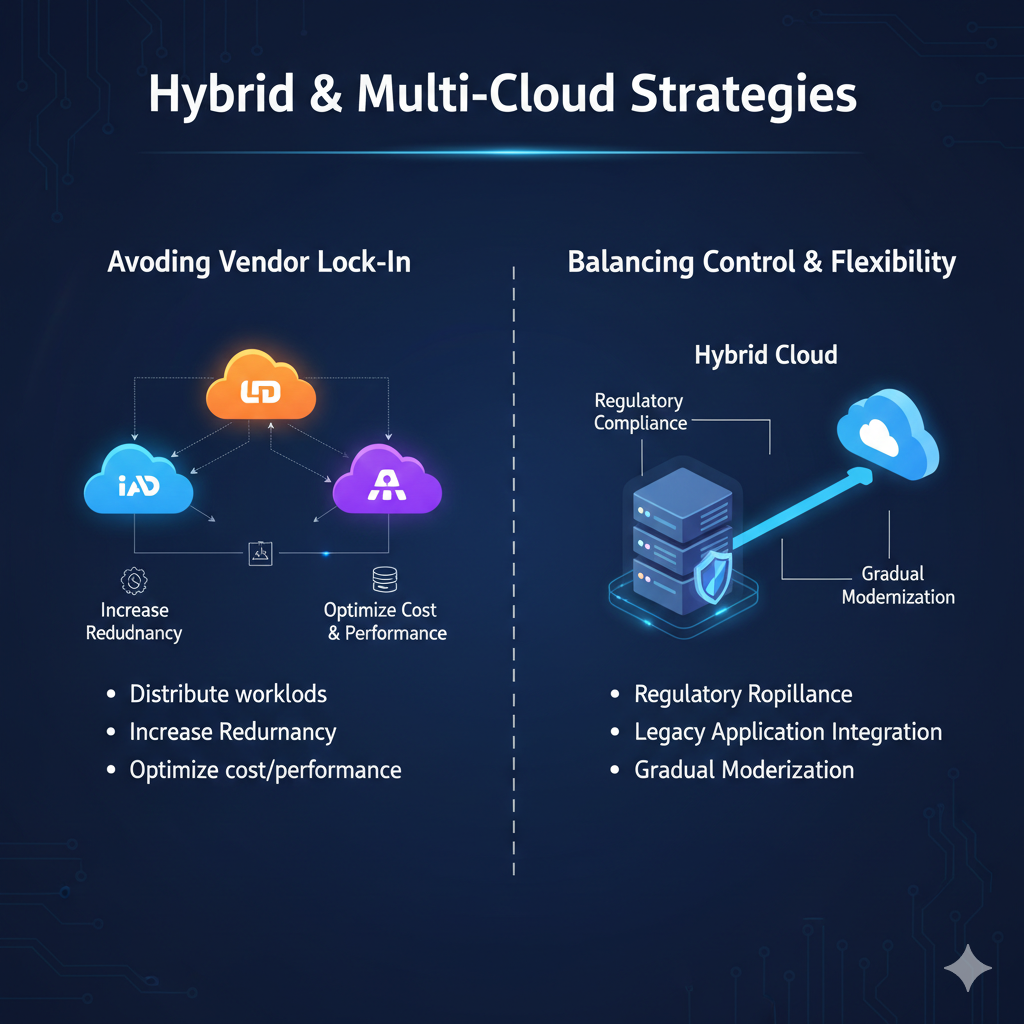
Hybrid and Multi-Cloud Strategies
Avoiding Vendor Lock-In
Modern businesses rarely rely on a single cloud provider. Multi-cloud strategies allow organizations to:
- Distribute workloads across providers
- Increase redundancy
- Optimize cost and performance
Digital infrastructure solutions must support interoperability and workload portability.
Balancing Control and Flexibility
Hybrid cloud environments combine on-premise systems with public cloud platforms. This approach supports:
- Regulatory compliance
- Legacy application integration
- Gradual modernization
Hybrid strategies provide flexibility while maintaining control over critical assets.
Business Continuity and Resilience
Disaster Recovery Planning
Resilient digital infrastructure includes:
- Automated backups
- Geographic redundancy
- Rapid failover mechanisms
Business continuity planning ensures operations remain uninterrupted even during outages or cyber incidents.
High Availability by Design
Modern digital infrastructure solutions are built for uptime. High availability architectures include:
- Redundant systems
- Distributed load balancing
- Continuous health monitoring
Resilience is engineered into the foundation of infrastructure systems.
Cost Management and Financial Governance
Optimizing Cloud Spending
Cloud flexibility can lead to overspending without governance. Effective digital infrastructure solutions include:
- Cost monitoring tools
- Budget alerts
- Usage optimization strategies
Financial transparency ensures infrastructure investments align with business value.
FinOps and Cross-Functional Collaboration
FinOps practices integrate finance, IT, and operations to manage cloud costs effectively. This collaboration promotes accountability and strategic resource allocation.
Supporting Modern Workforces and Digital Experiences
Remote and Hybrid Work Enablement
Modern businesses require infrastructure that supports:
- Secure remote access
- Cloud-based collaboration tools
- Virtual desktop environments
Digital infrastructure solutions ensure employees can work efficiently from anywhere.
Customer-Facing Digital Platforms
Infrastructure must also support:
- High-traffic e-commerce platforms
- Real-time service applications
- API-driven ecosystems
Customer experience depends heavily on the reliability and performance of digital infrastructure.
Governance, Compliance, and Risk Management
Policy-Driven Infrastructure Management
Modern enterprises implement governance frameworks that define:
- Access controls
- Configuration baselines
- Compliance standards
Automation ensures policies are consistently enforced across environments.
Continuous Compliance Monitoring
Rather than periodic audits, digital infrastructure solutions support continuous compliance through real-time assessments and reporting.
This proactive approach reduces regulatory risk and strengthens organizational trust.
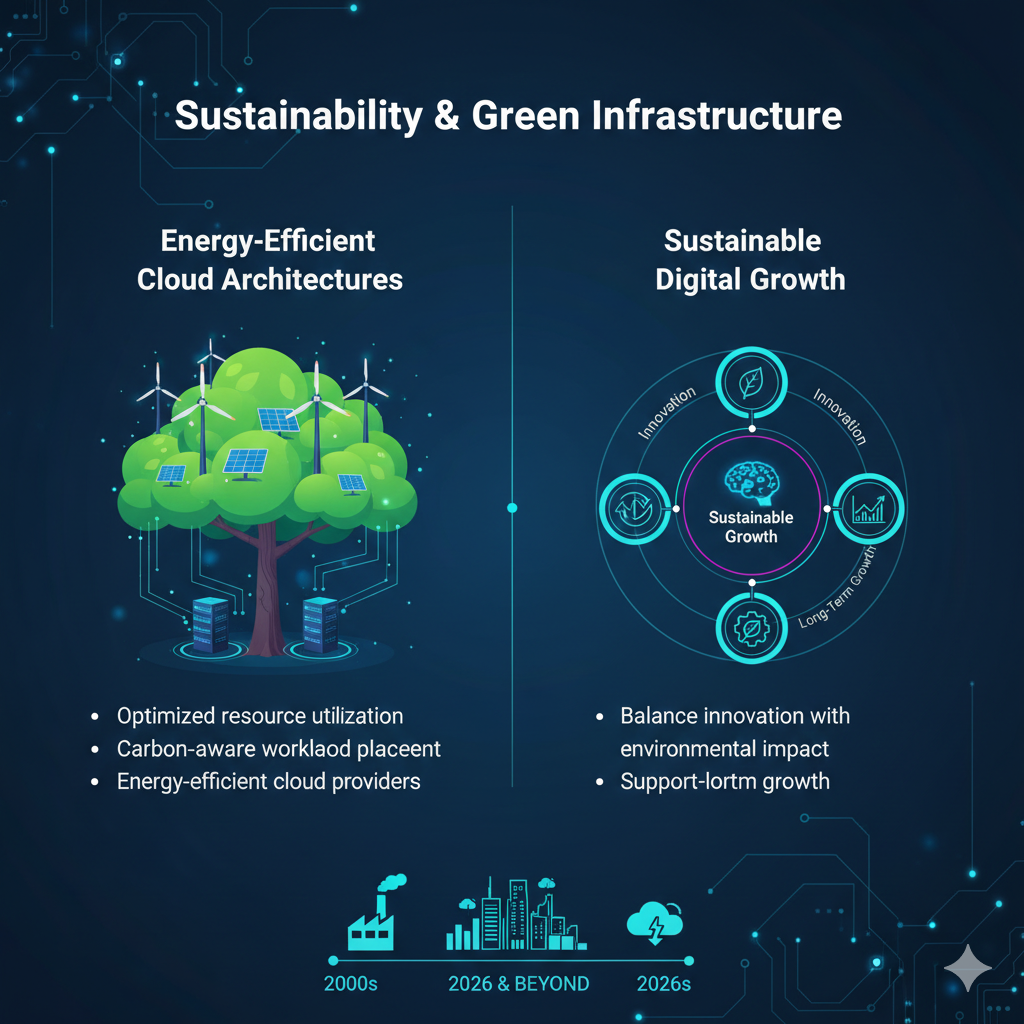
Sustainability and Green Infrastructure
Energy-Efficient Cloud Architectures
Sustainability is becoming a priority for enterprises worldwide. Modern infrastructure strategies focus on:
- Optimized resource utilization
- Carbon-aware workload placement
- Energy-efficient cloud providers
Environmental responsibility is now part of infrastructure planning.
Sustainable Digital Growth
Digital transformation must balance innovation with environmental impact. Sustainable digital infrastructure solutions support long-term growth without excessive resource consumption.
The Future of Digital Infrastructure Solutions
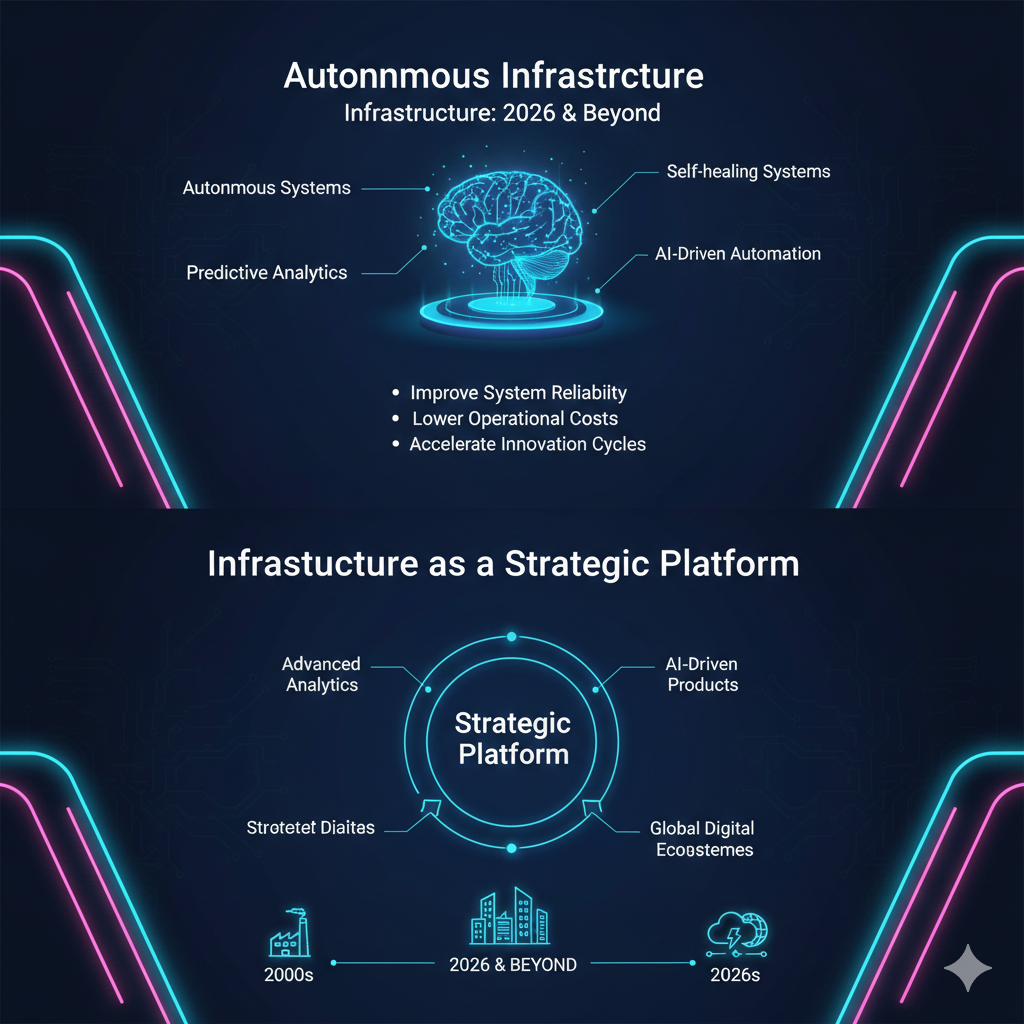
Autonomous Infrastructure
Looking ahead, infrastructure will become increasingly autonomous. Self-healing systems, predictive analytics, and AI-driven automation will reduce manual intervention.
Autonomous digital infrastructure solutions will:
- Improve system reliability
- Lower operational costs
- Accelerate innovation cycles
Infrastructure as a Strategic Platform
Infrastructure will continue evolving into a strategic business platform rather than a background utility. It will power:
- Advanced analytics
- AI-driven products
- Global digital ecosystems
Organizations that invest strategically in digital infrastructure will lead their industries.
Conclusion
Modern enterprises operate in an environment defined by speed, connectivity, and constant change. The demand for scalable, secure, and intelligent systems has elevated infrastructure from a technical necessity to a strategic priority. Effective digital infrastructure solutions integrate cloud computing, advanced networking, automation, security, and governance into a cohesive framework that supports innovation and resilience.
As businesses navigate digital transformation in 2026 and beyond, the importance of strong infrastructure foundations cannot be overstated. Digital Infrastructure & Cloud Solutions: What Modern Businesses Need is not simply a concept—it represents the blueprint for sustainable growth, operational excellence, and long-term competitive advantage in the digital era.