
In today’s fast-paced digital landscape, organizations must build infrastructure that supports not only immediate growth but also long-term operational stability. EMPATH TECH FZCO partners with enterprises to design resilient and future-ready architectures that enable sustainable success. At the core of this strategy lies the development of a scalable cloud foundation—a structured, secure, and adaptable cloud environment that supports continuous innovation and operational excellence.
A strong cloud foundation is not simply about migrating workloads to the cloud. It is about designing systems that are reliable, secure, cost-efficient, and capable of evolving alongside business objectives. This article explores how enterprises can build a scalable cloud foundation that ensures stability, resilience, and long-term operational efficiency.
Understanding the Importance of a Scalable Cloud Foundation
What Is a Scalable Cloud Foundation?
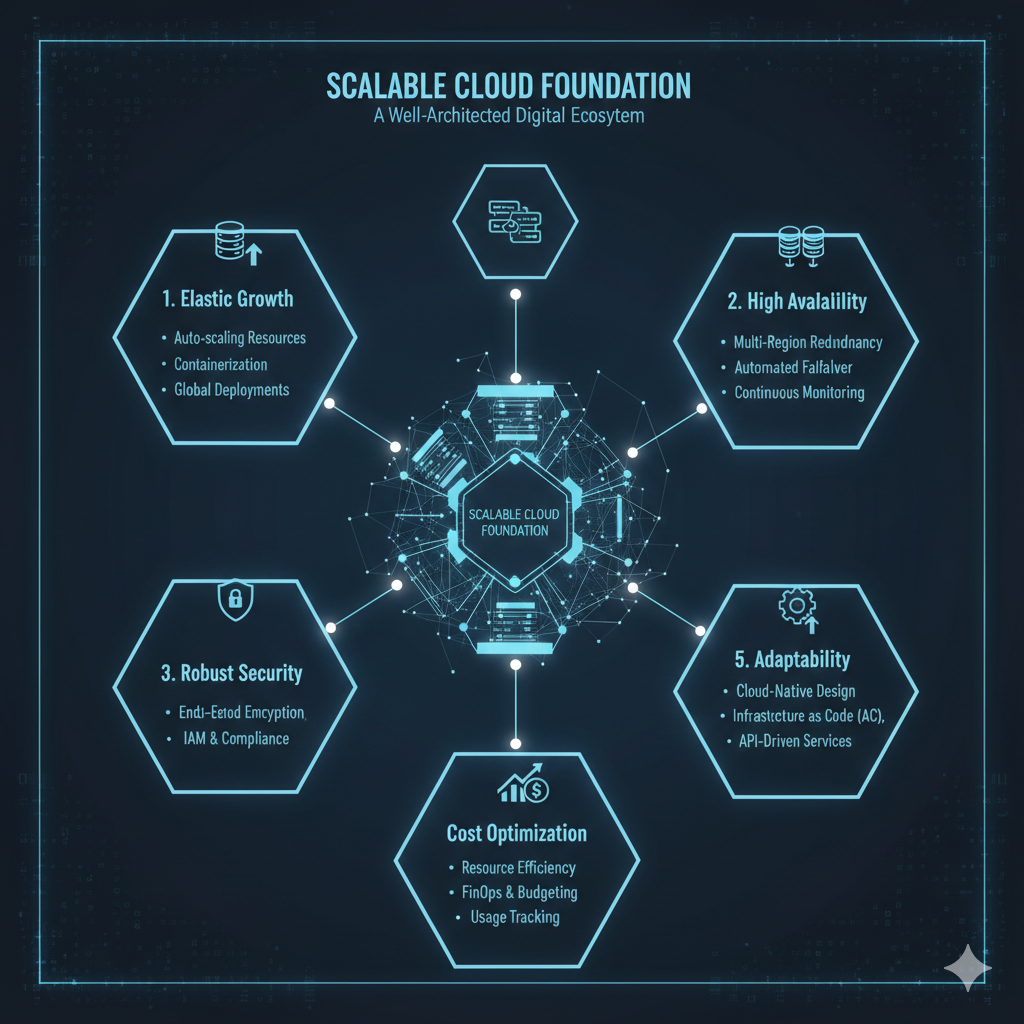
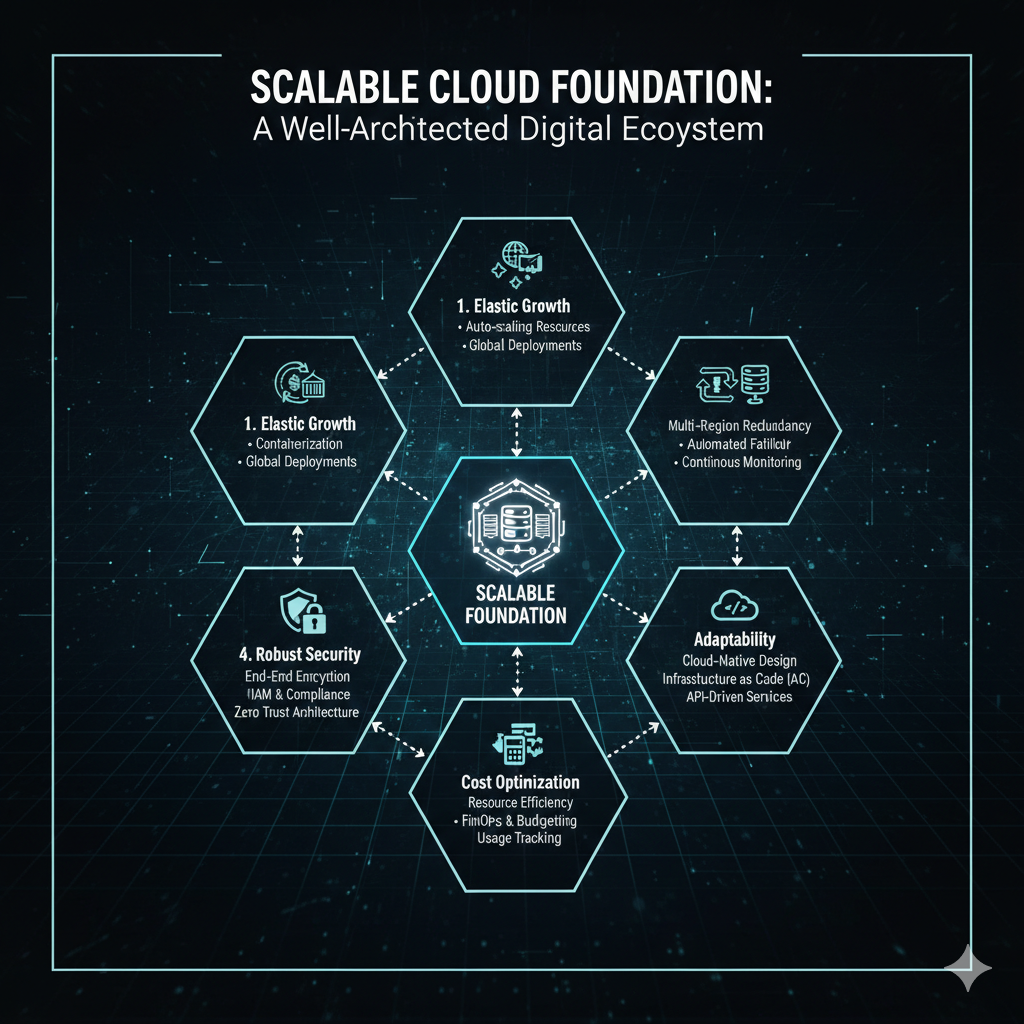
A scalable cloud foundation refers to a well-architected cloud environment designed to:
- Support elastic growth
- Maintain high availability
- Ensure security and compliance
- Optimize performance and cost
- Adapt to evolving business needs

It combines cloud infrastructure, governance frameworks, automation, networking, and security controls into a cohesive ecosystem aligned with a robust enterprise cloud infrastructure strategy.
Why Long-Term Operations Depend on It
Organizations without a structured cloud foundation often face:
- Performance bottlenecks
- Security vulnerabilities
- Rising operational costs
- Infrastructure complexity
A scalable cloud foundation ensures operational continuity while supporting expansion and innovation.
Core Principles of a Reliable Cloud Foundation
1. Scalability by Design
Scalability must be embedded into architecture from the beginning. A scalable cloud foundation should include:
- Auto-scaling compute resources
- Elastic storage solutions
- Load balancing across regions
- Containerized and microservices architectures
Designing for scalability prevents disruption as workloads increase.
2. High Availability and Resilience
Reliability requires redundancy and failover mechanisms. Enterprises should implement:
- Multi-region deployments
- Redundant data storage
- Automated failover systems
- Continuous health monitoring
These capabilities ensure uptime and business continuity as part of a structured business continuity planning within IT operations framework.
3. Security as a Foundational Layer
Security must be integrated into every layer of the scalable cloud foundation. Key components include:
- Identity and Access Management (IAM)
- End-to-end encryption
- Zero Trust architecture
- Real-time threat detection
Security frameworks should scale alongside business growth.
Architectural Components of a Scalable Cloud Foundation
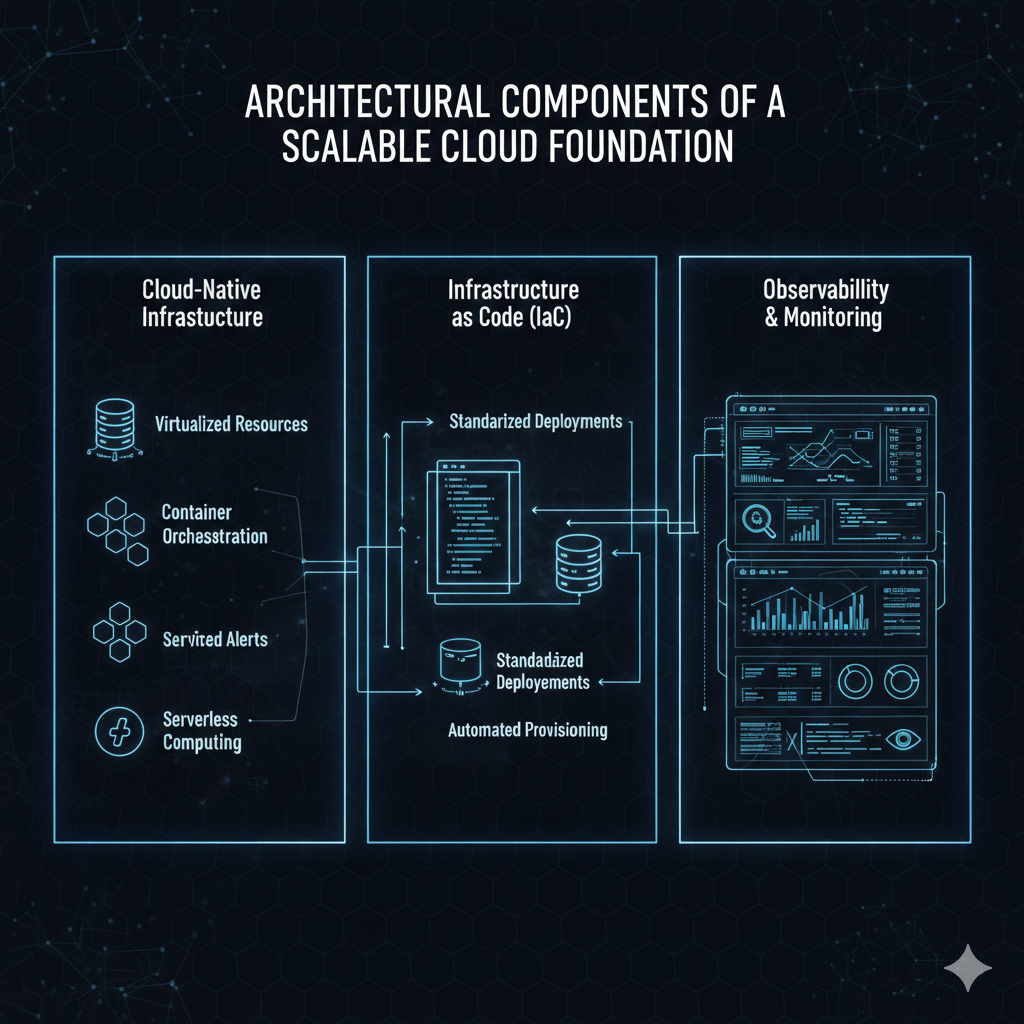
Cloud-Native Infrastructure
Modern cloud foundations leverage:
- Virtualized resources
- Container orchestration platforms
- Serverless computing models
- API-driven services
Cloud-native architectures improve flexibility and resource efficiency.
Infrastructure as Code (IaC)
Automation is critical for long-term sustainability. Infrastructure as Code allows organizations to:
- Standardize deployments
- Minimize configuration drift
- Accelerate environment provisioning
- Improve consistency across regions
IaC strengthens operational reliability.
Observability and Monitoring
Continuous visibility ensures stability. A scalable cloud foundation should include:
- Centralized logging
- Real-time monitoring dashboards
- Performance analytics
- Automated alerts
Observability helps prevent minor issues from escalating.
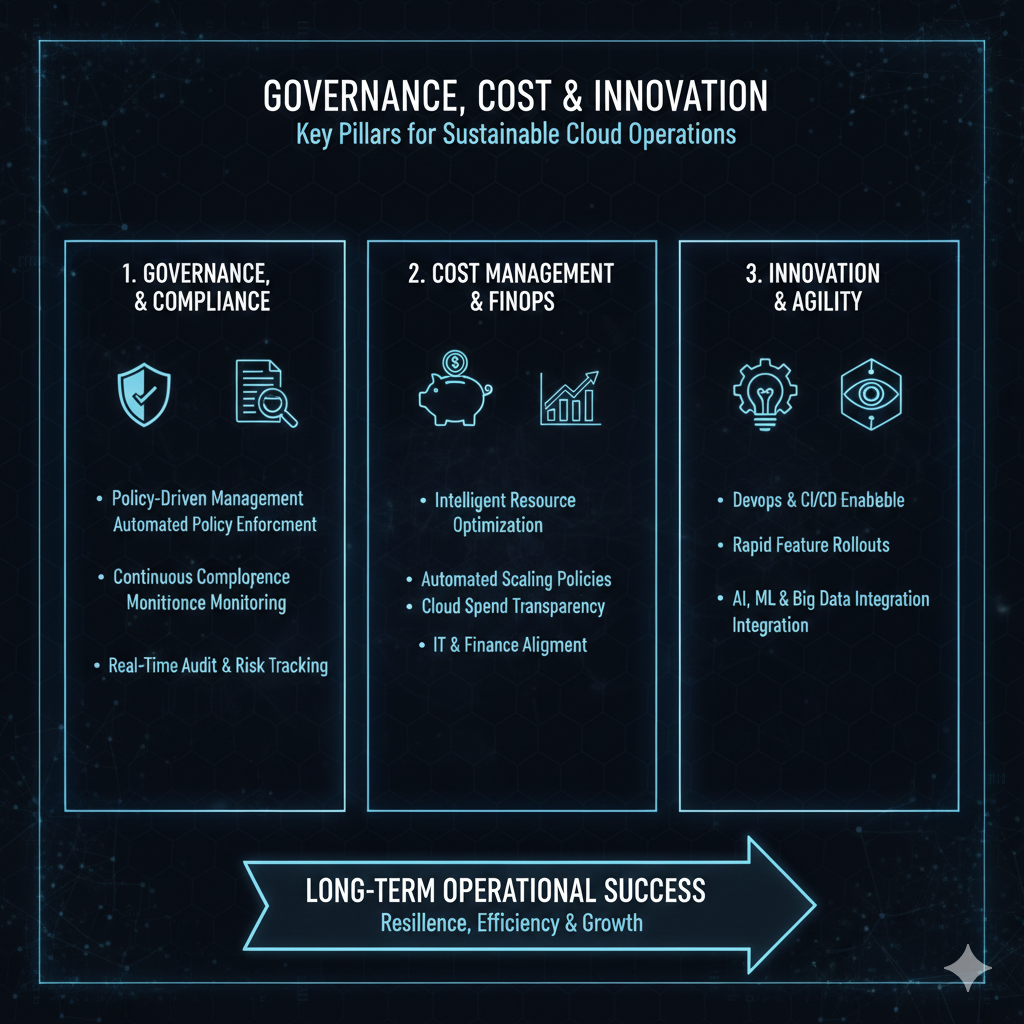
Governance and Compliance Integration
Policy-Driven Management
Enterprises must implement governance frameworks that enforce:
- Access controls
- Configuration baselines
- Compliance standards
- Resource usage policies
Automation ensures policies are consistently applied across the cloud environment.
Continuous Compliance Monitoring
Modern regulatory environments require ongoing oversight. A scalable cloud foundation enables:
- Automated compliance reporting
- Real-time audit tracking
- Risk assessment tools
Compliance becomes proactive rather than reactive.
Cost Management for Sustainable Growth
Intelligent Resource Optimization
Cost control is essential for long-term operations. Organizations should implement:
- Usage tracking tools
- Automated scaling policies
- Budget alerts
- Resource optimization strategies
A scalable cloud foundation balances performance with financial efficiency.
Aligning IT and Finance Through FinOps
FinOps practices integrate finance and IT teams to:
- Forecast cloud spending
- Optimize investment decisions
- Improve cost transparency
Financial governance strengthens operational sustainability.
Supporting Innovation and Digital Transformation
Enabling DevOps and Agile Practices
Modern businesses require rapid deployment cycles. A scalable cloud foundation supports:
- Continuous integration and deployment
- Automated testing pipelines
- Rapid feature rollouts
Innovation becomes part of operational rhythm.
Integrating Advanced Technologies
Reliable cloud foundations support:
- Artificial Intelligence (AI)
- Machine Learning (ML)
- Big Data analytics
- IoT deployments
These technologies enable competitive differentiation.
Disaster Recovery and Business Continuity
Cloud-Based Backup and Recovery
Enterprises must plan for unexpected disruptions. A scalable cloud foundation includes:
- Automated data backups
- Multi-zone replication
- Rapid restoration capabilities
Preparedness ensures minimal operational downtime.
Risk Mitigation Through Diversification
Hybrid or multi-cloud strategies enhance resilience by distributing workloads across multiple environments.
Diversification strengthens long-term operational stability.
Workforce Enablement and Global Scalability
Supporting Distributed Teams
Modern enterprises require secure access from anywhere. A scalable cloud foundation enables:
- Secure remote connectivity
- Unified identity management
- Cloud-based collaboration tools
Productivity scales with infrastructure.
Global Infrastructure Expansion
Cloud foundations designed for scalability allow enterprises to:
- Deploy services globally
- Reduce latency
- Meet regional compliance requirements
Infrastructure supports international growth.
Future-Proofing Cloud Operations
AI-Driven Infrastructure Optimization
Emerging technologies allow infrastructure to become more intelligent. AI-powered systems can:
- Predict workload demands
- Automate scaling decisions
- Detect anomalies proactively
Automation enhances long-term reliability.
Sustainable Cloud Strategies
Environmental responsibility is increasingly important. Enterprises can design scalable cloud foundations that prioritize:
- Energy-efficient workloads
- Optimized resource utilization
- Sustainable data center practices
Sustainability aligns operational goals with corporate responsibility.
Conclusion
Building a reliable and scalable cloud foundation is essential for enterprises seeking long-term operational success. It requires thoughtful architecture, integrated security, automation, governance, and financial oversight.
Organizations that invest in scalable cloud foundations can innovate confidently, expand globally, and maintain operational resilience in a rapidly changing digital environment. With strategic expertise from EMPATH TECH FZCO, businesses can design and implement cloud foundations that not only meet today’s demands but also support tomorrow’s growth and transformation.