
In an increasingly connected and threat-driven digital environment, businesses must move beyond basic security controls and adopt structured, scalable protection strategies. EMPATH TECH FZCO works with organizations to design resilient, future-ready security architectures that protect digital assets while supporting growth and innovation. At the center of this effort is the development of a strong enterprise cybersecurity framework—a comprehensive structure that aligns technology, governance, and operational practices to defend against modern threats.
Cybersecurity is no longer just an IT issue. It is a board-level priority that directly affects business continuity, regulatory compliance, customer trust, and financial stability. This guide explores how businesses can strengthen their enterprise cybersecurity framework and build long-term digital resilience.
Understanding the Enterprise Cybersecurity Framework
What Is an Enterprise Cybersecurity Framework?
An enterprise cybersecurity framework is a structured set of policies, controls, technologies, and processes designed to protect an organization’s digital infrastructure. It typically includes:
- Risk management methodologies
- Access control systems
- Threat detection and monitoring
- Incident response procedures
- Compliance and governance policies
The goal of an enterprise cybersecurity framework is to provide consistent, scalable, and measurable protection across the organization.
Why Businesses Need a Structured Framework
Without a formalized framework, security efforts often become fragmented and reactive. A well-designed enterprise cybersecurity framework ensures:
- Clear accountability
- Standardized protection measures
- Continuous improvement
- Alignment with regulatory requirements
Framework-driven security improves resilience and operational stability.
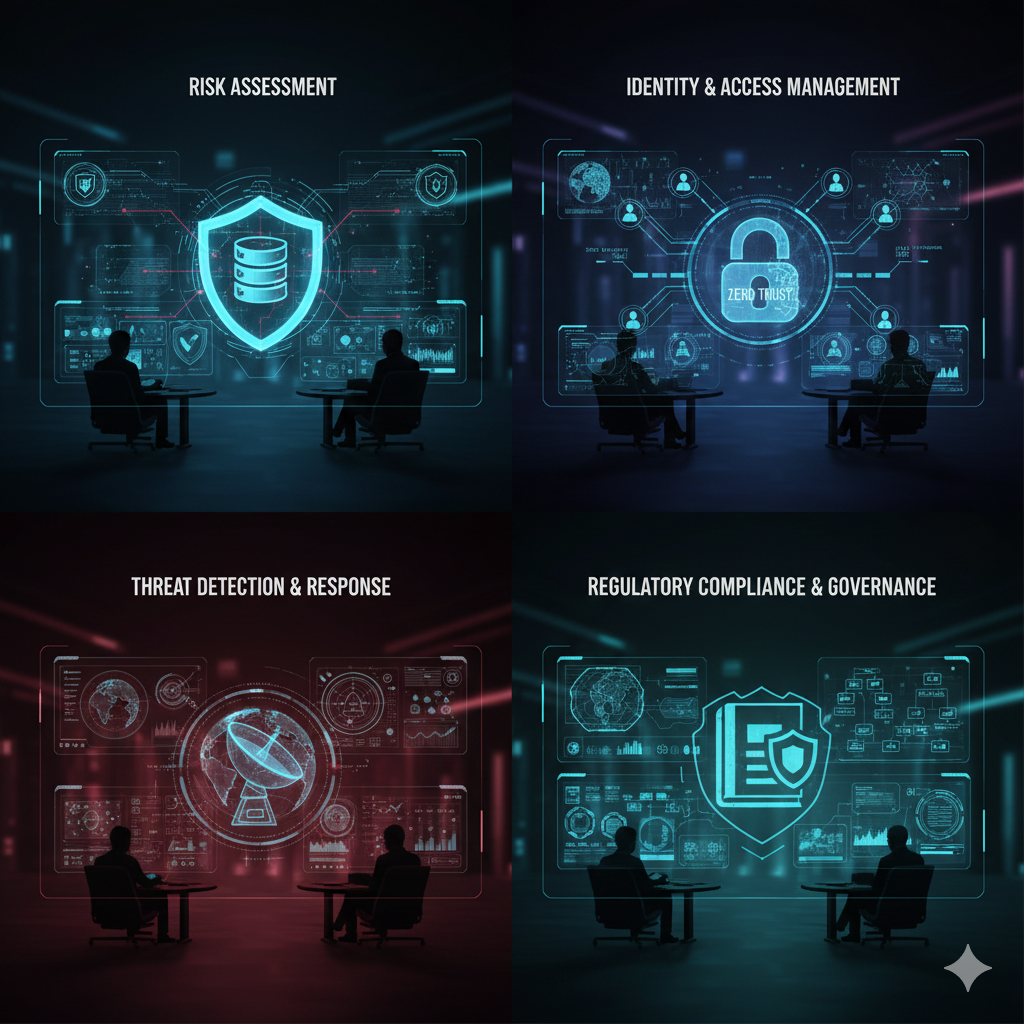
Step 1: Conduct a Comprehensive Risk Assessment
Identifying Critical Assets
The foundation of a strong enterprise cybersecurity framework begins with understanding what needs protection. Businesses should identify:
- Sensitive customer data
- Intellectual property
- Financial systems
- Operational infrastructure
- Cloud-based applications
Asset mapping helps prioritize security investments.
Evaluating Threat Landscape
Organizations must assess both internal and external risks, including:
- Phishing and ransomware
- Insider threats
- Supply chain vulnerabilities
- Cloud misconfigurations
A risk-based approach, supported by a structured digital risk management strategy, strengthens the cybersecurity framework and improves long-term resilience.
Step 2: Implement Strong Identity and Access Management
Enforcing Least Privilege Access
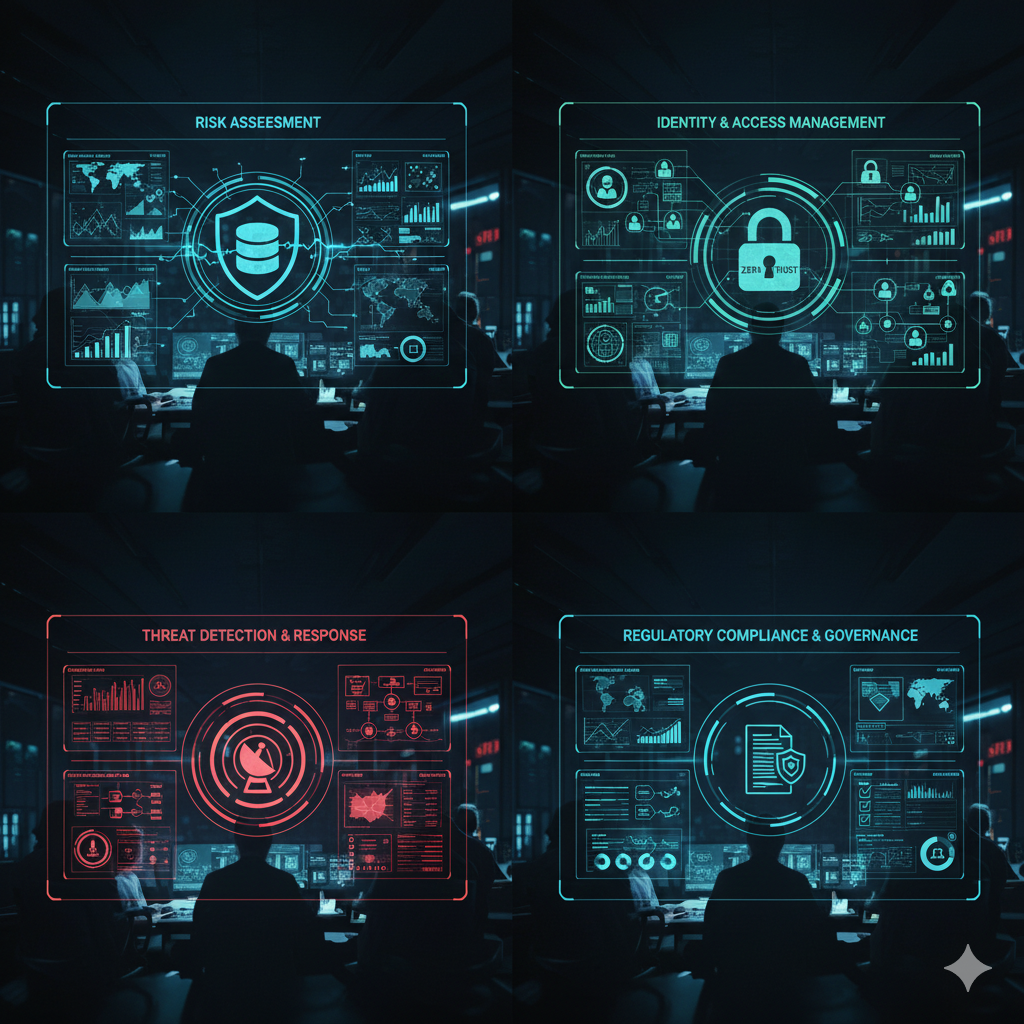
Access control is central to any enterprise cybersecurity framework. Best practices include:
- Role-based access control (RBAC)
- Multi-factor authentication (MFA)
- Privileged access management (PAM)
- Continuous identity verification
Limiting access reduces exposure to breaches.
Zero Trust Security Model
Modern frameworks increasingly adopt Zero Trust principles, assuming no user or device is automatically trusted. Zero Trust enhances:
- Micro-segmentation
- Continuous monitoring
- Context-based access decisions
This approach significantly strengthens enterprise security posture.
Step 3: Strengthen Network and Infrastructure Security
Network Segmentation
Segmenting networks prevents attackers from moving laterally across systems. Effective segmentation includes:
- Separating critical systems
- Isolating sensitive data environments
- Limiting internal communication paths
Segmentation reduces potential damage during incidents.
Cloud Security Integration
As organizations adopt cloud-first strategies, enterprise cybersecurity frameworks must incorporate:
- Secure cloud configurations
- Cloud-native firewalls
- API security controls
- Shared responsibility awareness
Cloud security is a critical framework component.
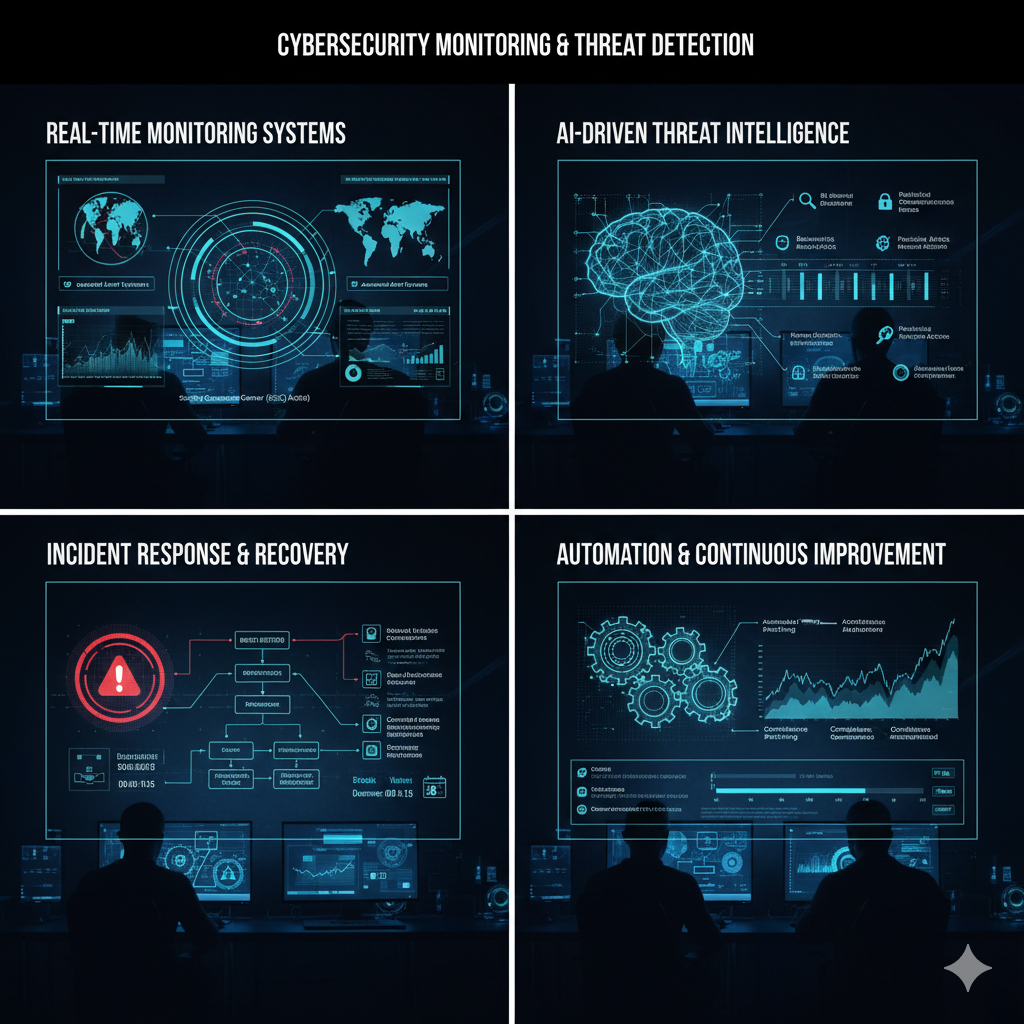
Step 4: Deploy Continuous Monitoring and Threat Detection
Real-Time Monitoring Systems
Modern cybersecurity frameworks rely on:
- Security Information and Event Management (SIEM)
- Security Operations Centers (SOC)
- Automated alert systems
Real-time monitoring enables rapid detection and response.
AI-Driven Threat Intelligence
Artificial intelligence enhances enterprise cybersecurity frameworks by:
- Detecting unusual behavioral patterns
- Predicting attack vectors
- Automating response actions
Proactive detection reduces impact.
Step 5: Establish Incident Response and Recovery Plans
Creating a Formal Incident Response Plan
Preparation minimizes disruption. An effective enterprise cybersecurity framework includes:
- Defined response teams
- Clear communication channels
- Containment procedures
- Recovery timelines
Structured response reduces downtime.
Business Continuity and Disaster Recovery
Resilience requires:
- Automated backups
- Redundant systems
- Multi-region failover strategies
A robust recovery strategy protects operational continuity.
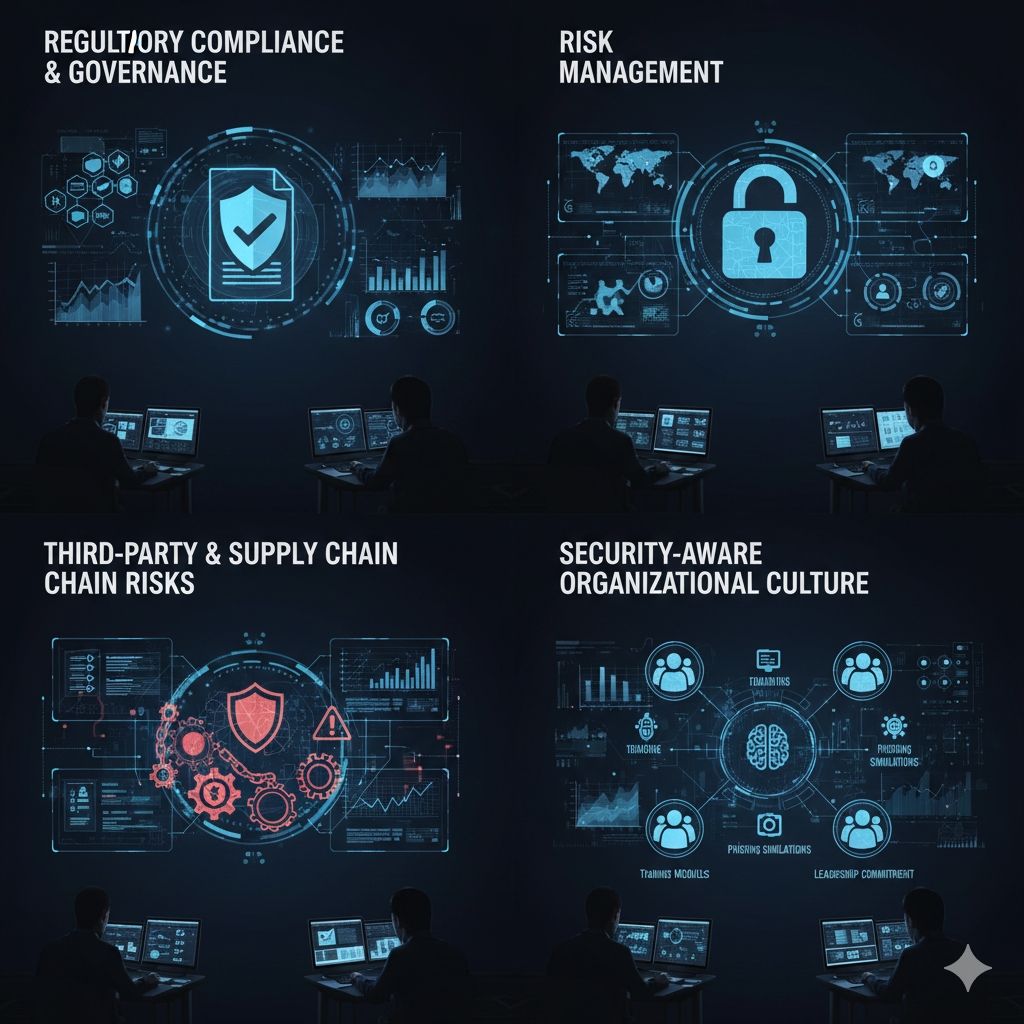
Step 6: Ensure Regulatory Compliance and Governance
Aligning With Compliance Standards
Enterprises must comply with various regulations. A strong cybersecurity framework integrates:
- Data protection policies
- Audit logging systems
- Compliance monitoring tools
- Risk documentation processes
Compliance alignment reduces legal risk when supported by structured regulatory compliance cybersecurity strategies integrated within the enterprise framework.
Governance and Executive Oversight
Leadership engagement ensures:
- Strategic resource allocation
- Continuous policy review
- Accountability at every level
Cybersecurity governance strengthens organizational maturity.
Step 7: Address Third-Party and Supply Chain Risks
Vendor Risk Management
External vendors often introduce vulnerabilities. Enterprise cybersecurity frameworks should include:
- Vendor security assessments
- Contractual security obligations
- Continuous third-party monitoring
Supply chain oversight reduces exposure.
Securing Integrations and APIs
Modern enterprises rely heavily on integrations. Securing APIs through authentication, rate limiting, and monitoring protects interconnected systems.
Step 8: Build a Security-Aware Organizational Culture
Employee Education and Training
Human error remains one of the leading causes of breaches. Businesses should:
- Conduct regular training sessions
- Run phishing simulations
- Encourage incident reporting
Employee awareness strengthens enterprise cybersecurity framework effectiveness.

Leadership Commitment
A culture of security begins at the top. Executive sponsorship ensures long-term investment and alignment with business goals.
Measuring and Improving Cybersecurity Effectiveness
Key Performance Indicators (KPIs)
Organizations should track:
- Incident response time
- Number of detected vulnerabilities
- Compliance audit outcomes
- Downtime metrics
Metrics provide insight into framework maturity.
Continuous Improvement and Adaptation
Cyber threats evolve rapidly. A strong enterprise cybersecurity framework must be:
- Reviewed regularly
- Updated with new technologies
- Aligned with emerging threats
Continuous improvement ensures sustainability.
Leveraging Automation and Advanced Technologies
Security Automation
Automation reduces manual workload by:
- Patching vulnerabilities automatically
- Managing configuration changes
- Generating compliance reports
Automation enhances scalability.
Behavioral Analytics and Predictive Security
Advanced analytics allow enterprises to anticipate threats and prevent attacks before they escalate.
The Business Benefits of a Strong Enterprise Cybersecurity Framework
A mature enterprise cybersecurity framework delivers:
- Reduced cyber risk
- Enhanced regulatory compliance
- Greater operational resilience
- Increased customer trust
- Stronger brand reputation
Security becomes a strategic differentiator.
Conclusion
Strengthening an enterprise cybersecurity framework requires more than isolated tools—it demands a comprehensive, risk-based strategy that integrates governance, technology, and culture. By conducting thorough risk assessments, implementing Zero Trust models, deploying continuous monitoring, and fostering a security-aware culture, businesses can build a resilient defense against modern threats.
With expert guidance from EMPATH TECH FZCO, organizations can design and implement enterprise cybersecurity frameworks that protect digital assets, ensure compliance, and support long-term innovation and growth. In today’s digital landscape, a strong cybersecurity framework is not optional—it is foundational to sustainable business success.